
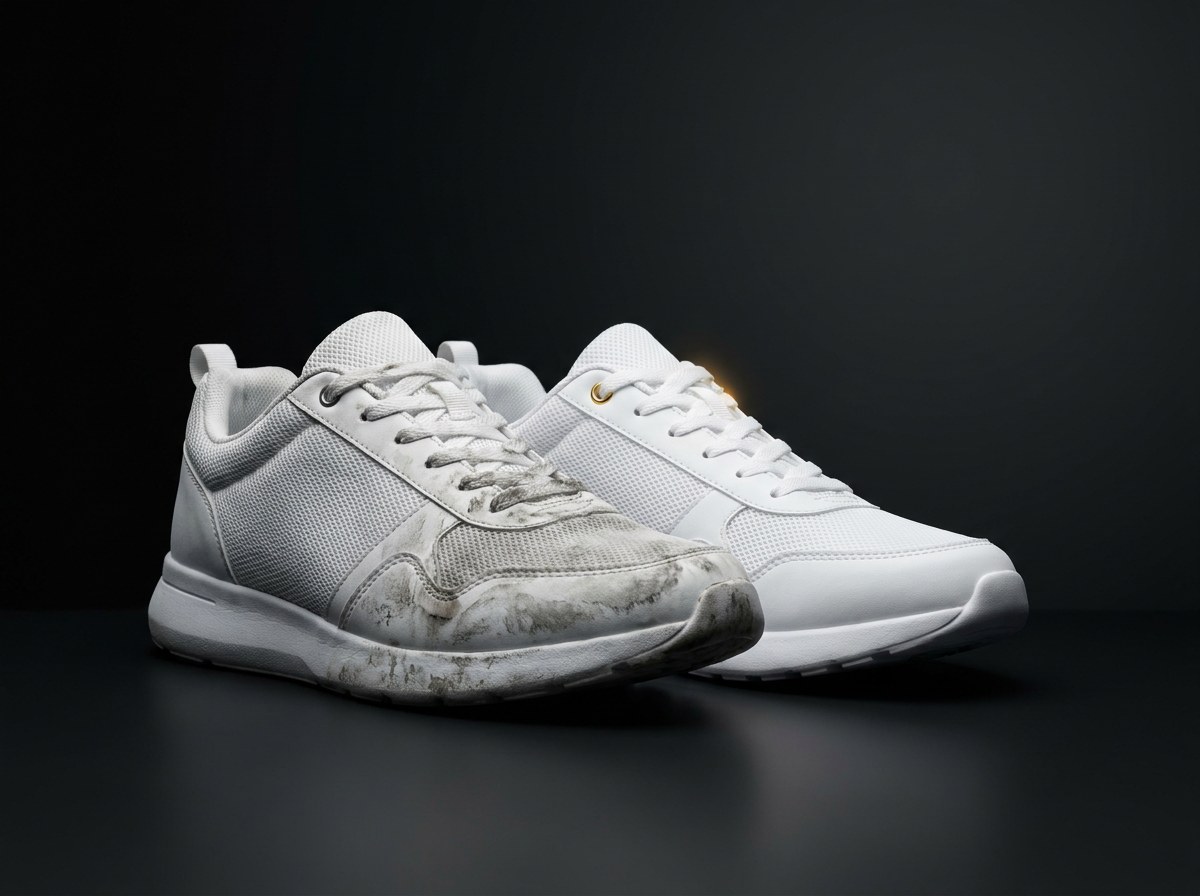
How to Clean White Mesh Trainers Without Damaging the Fabric
To clean white mesh trainers, remove the laces and brush off dry dirt with a soft-bristled brush. Patch-test a shoe-safe foam, work it over the mesh with light pressure and avoid soaking the fabric. Wipe away the dirty foam with a damp microfibre cloth, then leave the trainers to air-dry at room temperature.
White mesh needs gentler treatment than leather or canvas. Modern mesh often consists of layered polyester, nylon or elastane knits. The open weave traps grime and can expose padding beneath it to excess moisture.
Why is cleaning white mesh trainers different from leather or canvas?
Mesh, leather and canvas need different care. Check the materials and care instructions for your particular pair before choosing a cleaner.
Use a soft brush and work in small areas. Hard scrubbing can fray the fibres, while soaking the padding makes drying harder and can leave tide marks. Lift away dirty foam as you go.
What tools and supplies do you need before starting?
Gather these tools before you start:
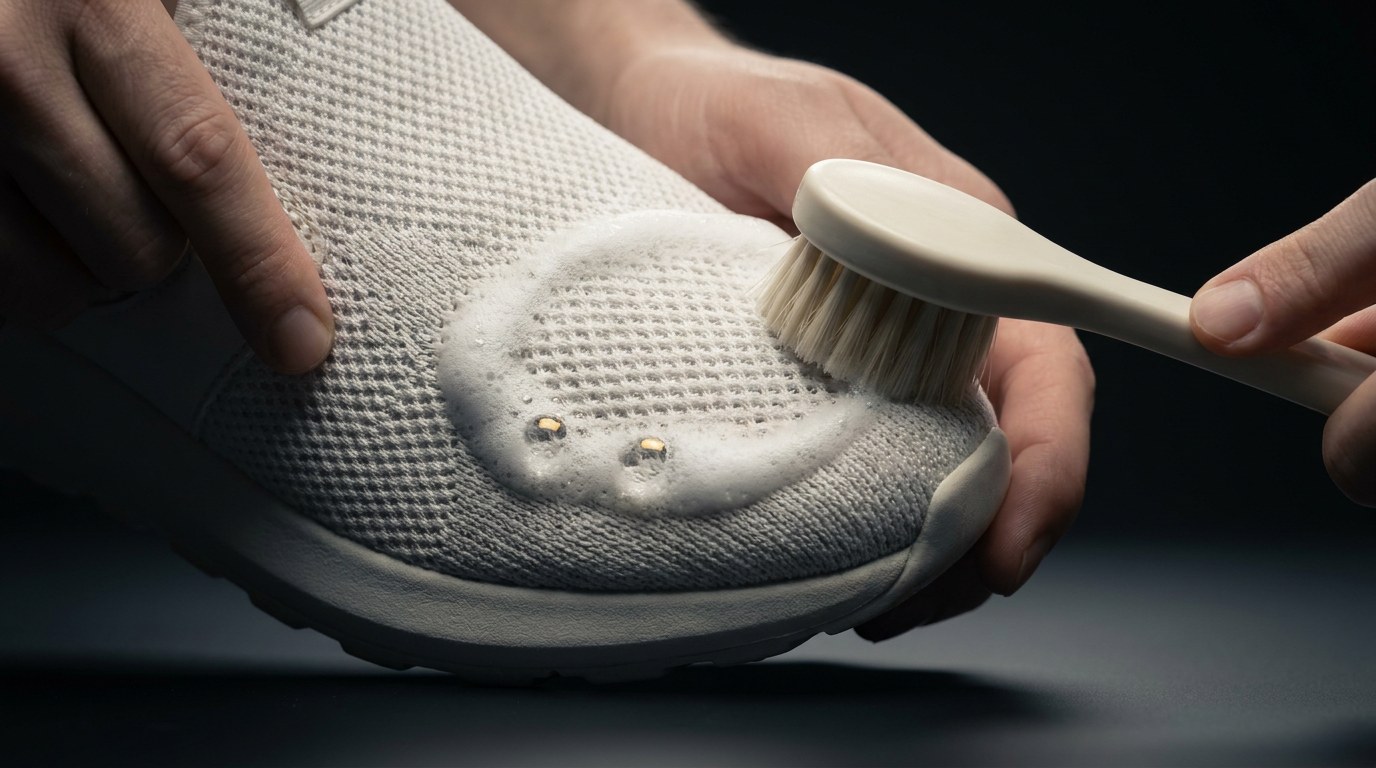
- Soft-bristled brush: Natural horsehair or ultra-soft synthetic bristles for the knit upper.
- Medium-to-stiff bristle brush: For textured rubber midsoles and outsole treads.
- Microfibre cloths: Clean, lint-free white towels to prevent dye transfer.
- Shoe trees or microfibre towels: To insert inside the shoe and support the toe box.
- Dedicated foaming cleaner: A specialised formula like ACTIVE FOAM.
- Heavy-duty sole cleaner: A targeted formulation like SNEAKER CLEANER for rubber sidewalls.
- Shallow bowl of lukewarm water: For light brush dampening (never hot water).
Before cleaning, perform a colourfastness patch test on the inside tongue edge. Follow the cleaner's label for the wait time, then blot with a dry cloth. Stop if colour transfers or the finish changes.
How to clean white mesh trainers step by step
Use this sequence to clean the mesh, rubber and removable parts separately.
Step 1: Pre-clean prep and shoe cavity support
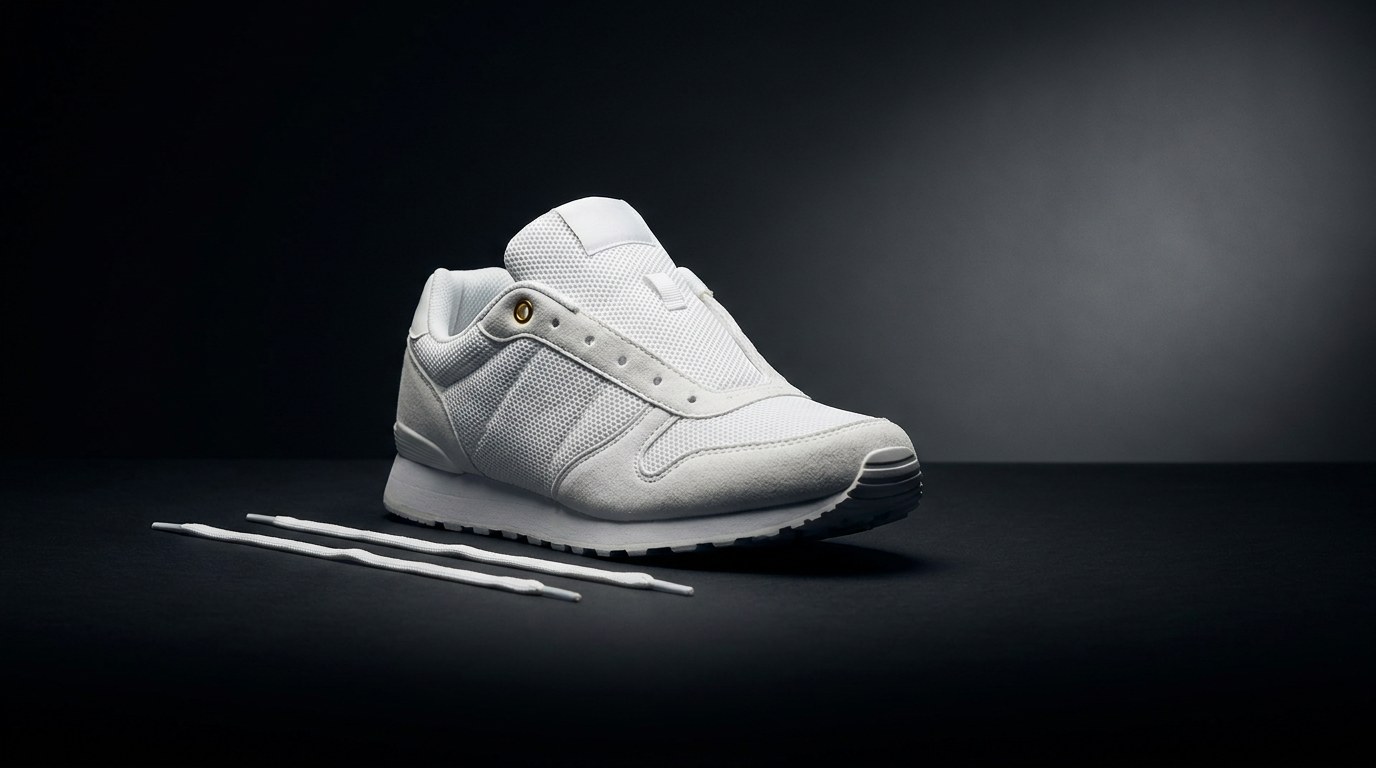
Remove the laces and any insoles designed to come out. Support the toe box with shoe trees or clean, unprinted paper so the mesh stays steady while you clean.
Step 2: Dry brushing loose surface debris
Never apply wet cleaners to dusty trainers, as liquid creates muddy slurry in mesh pores. Sweep a dry, soft brush across the upper to flick loose dirt away, and tap soles together to clear treads.
Step 3: Cleaning the mesh upper with low-moisture foam
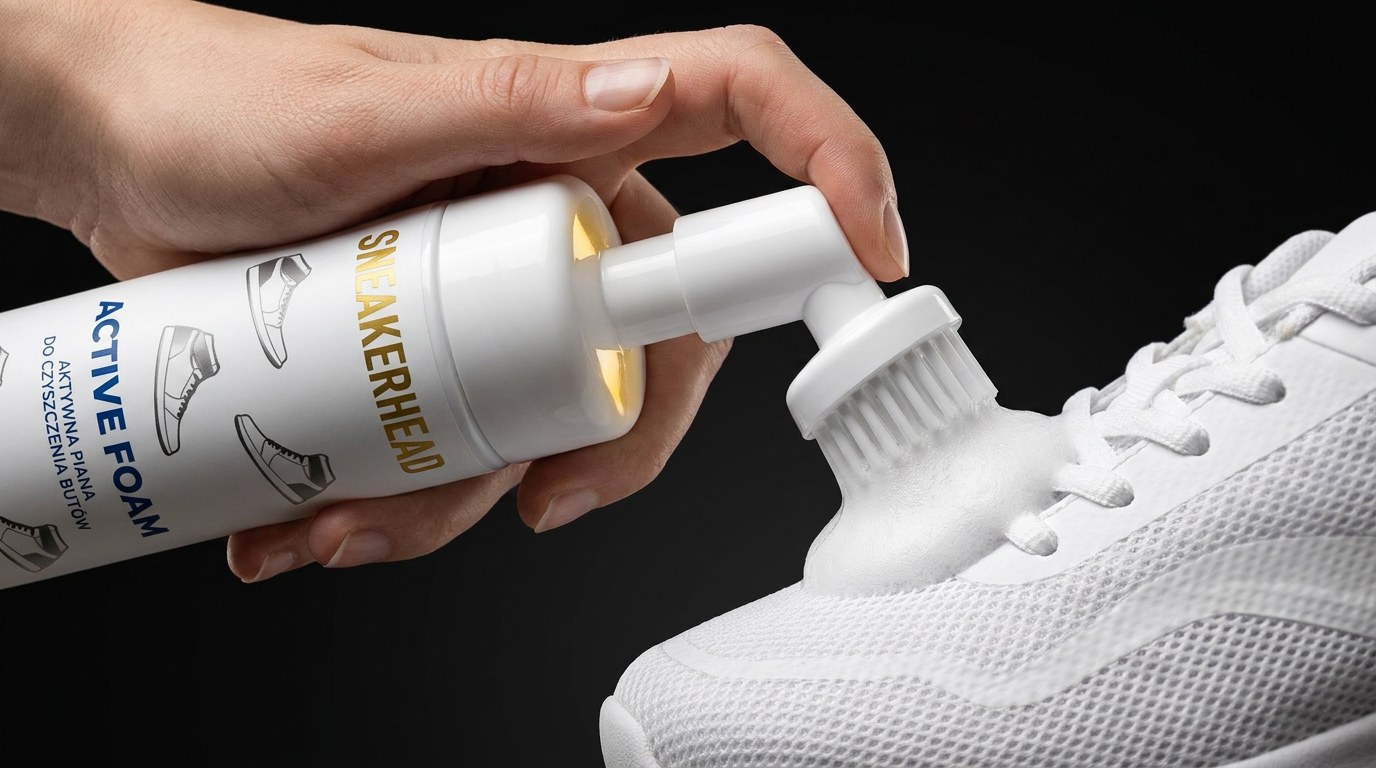
Apply ACTIVE FOAM directly to the shoe after a patch test, shaking the bottle and unlocking the pump. Work one panel at a time. When the foam changes from blue to white, clean the area with the integrated brush, then wipe away foam and dirt with a damp cloth.
Step 4: Blotting and extracting lifted soil
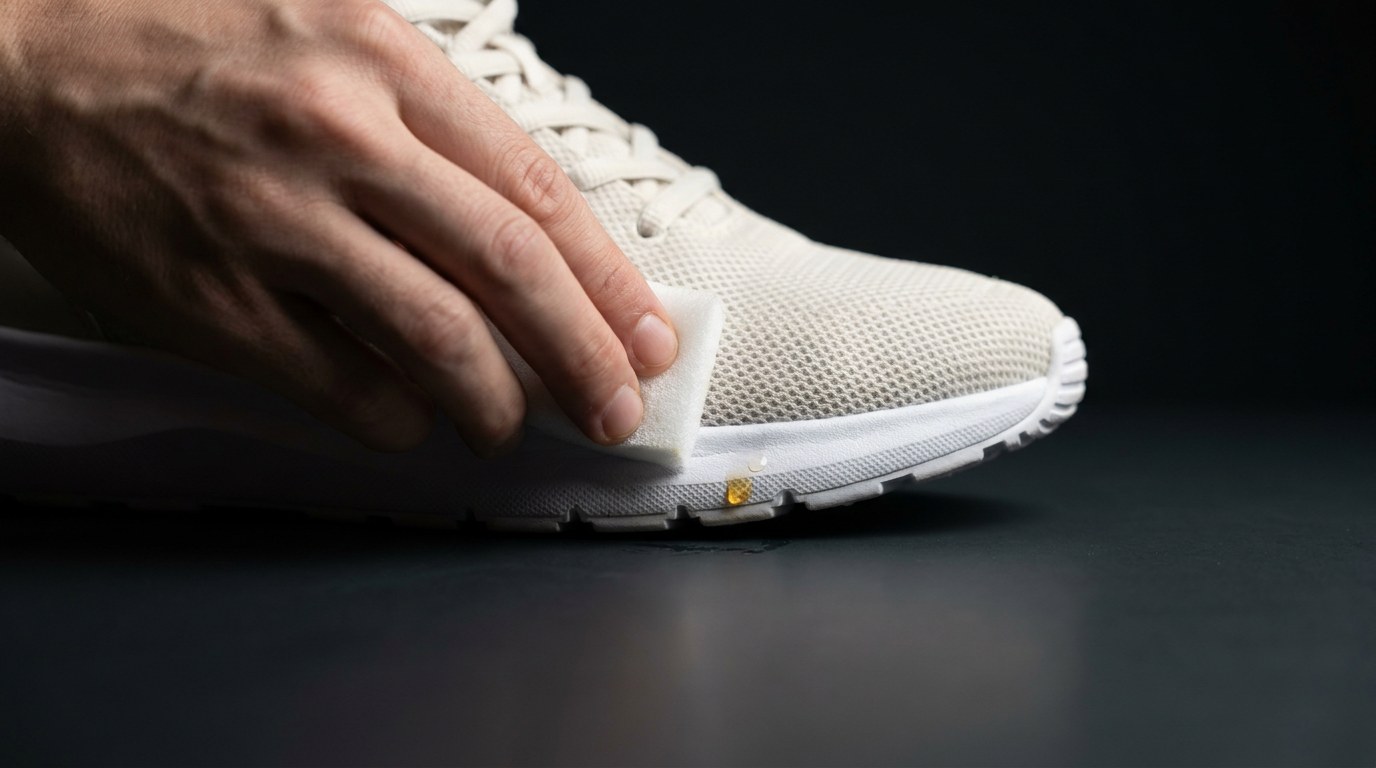
Press a damp microfibre cloth against the treated zone to lift away the soiled foam. Rotate the cloth so that you do not spread dirt back over the mesh.
Step 5: Refreshing laces and tongue padding
Hand-wash laces with a cleaner their care label permits, rinse them and leave them to air-dry. Clean the tongue panel with a soft brush and low-moisture foam.
Step 6: Scrubbing the rubber midsole and outsole
Rubber midsoles collect stubborn scuffs. Apply SNEAKER CLEANER with the sponge supplied with the product, using light circular motions. Wipe away the paste with a damp microfibre cloth.
What is the safest way to clean each shoe surface?
Match the brush and cleaner to each surface, and keep dirt from the sole away from the white upper.
| Surface | Recommended Tool | Moisture Level | Do Not Use |
|---|---|---|---|
| Mesh / Knit Upper | Soft horsehair brush, microfibre towel | Low (foam only, damp blot) | Stiff nylon bristles, direct submersion, bleach, acetone |
| Textile & Canvas Panels | Medium-soft bristle brush, microfibre cloth | Moderate (light foam application) | Wire brushes, solvent thinners, heavy soaking |
| Laces | Hand wash in bowl or mesh laundry bag | High (submerged soak & rinse) | Tumble dryers, chlorine bleach, high heat |
| Rubber Midsole (EVA / PU) | Medium-to-stiff synthetic brush | Moderate (targeted solution scrub) | Acetone, wire bristles, harsh industrial acids |
| Outsole / Tread | Stiff nylon utility brush, pick tool | High (direct scrub & wipe) | Sharp metal blades that gouge rubber lugs |
How to clean white shoes without washing or soaking?
A small mark often needs only a spot clean. Avoid soaking the whole shoe when just one area needs attention.
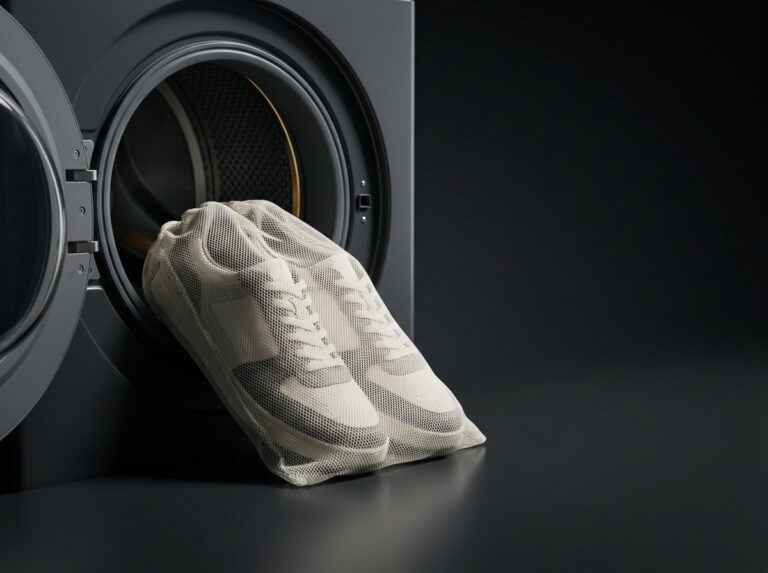
For minor marks, use a compact shampoo-filled CLEANING SPONGE after a patch test. Press the package to release the cleaner, work it into a foam with circular motions, then remove the residue with a clean damp cloth. If the care label permits machine washing, learn how to wash shoes in the washing machine using a mesh bag.
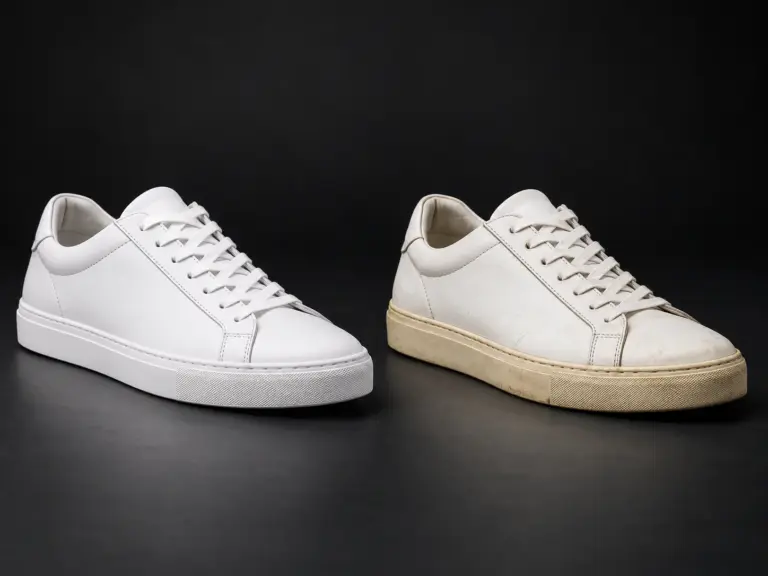
When is yellowing a cleaning problem versus permanent material oxidation?
If the sole stays yellow after cleaning, more scrubbing may not help.
Scrubbing removes surface dirt and grease. Sunlight and oxygen can also change the colour of some rubber and foam within the material. If a gentle test clean makes no difference after drying, stop scrubbing and assess the sole for cosmetic restoration.
When cleaning no longer alters sole colour, you have reached the limit of washing. COLOR MARKER WHITE can cover discolouration on clean, dry rubber; this is a cosmetic restoration rather than cleaning. For the clean-or-restore decision, refer to our guide on how to treat white rubber that has turned yellow.
How do you dry white mesh shoes without causing water stains or warping?
Let the pair dry in a ventilated spot away from radiators, hot air and strong sunlight. High heat can damage materials and glued joins.
To dry your trainers safely:
- Absorb internal moisture: Insert dry white microfibre towels into shoe cavities to absorb moisture and maintain shape. Never use printed newspaper, as ink transfers to wet linings.
- Select a ventilated space: Place footwear in a warm, dry room with consistent air circulation, elevated off the ground.
- Avoid direct heat and sunlight: Keep trainers away from window sills with harsh direct sunlight and heating elements.
- Check before wear: Drying time depends on moisture and room airflow. Wear the pair only after the upper, lining and footbed feel dry.
How to keep white shoes white after cleaning?
Once trainers are clean and dry, maintenance takes less work than another deep clean. Learning how to keep white shoes white comes down to protection, prompt spot treatment and dry storage.
Once the pair is clean and dry, patch-test WATER PROTECTOR. Follow its label for application from about 15–20 cm, removal of excess and the one-hour drying period. See our spray application guide for the full routine.
In addition to exterior protection, maintain interior freshness by rotating footwear between wears. Allowing internal linings to dry out prevents moisture build-up; if smells arise, learn how to eliminate trapped trainer odour with cleaning and thorough drying.
FAQ
How to clean white shoes without bleach safely?
Avoid chlorine bleach unless the shoe manufacturer explicitly permits it. Bleach can discolour synthetic mesh and damage adhesives or finishes. Use a shoe-safe cleaner, patch-test it on a hidden area, and follow the shoe and cleaner labels. Treat the mesh, rubber and leather zones according to their own care instructions.
Can I put white mesh trainers in the washing machine?
Washing machines should be a last resort. Only machine-wash the shoes if their manufacturer permits it. For an approved pair, remove laces and insoles, place the shoes in a padded mesh bag, wash alongside towels, and use cold water on a gentle cycle. Never tumble dry.
How long does it take for white mesh trainers to dry completely?
Drying time depends on how wet the padding became and on room airflow. Leave the trainers at room temperature until the upper, lining and footbed all feel dry. Check deep inside the toe box as well as the outer mesh. A fan can improve airflow without adding heat.
Why did my white mesh trainers turn yellow after drying?
Cleaning residue or dirty water can leave a yellow tide mark as the mesh dries. Wipe away the cleaner according to its label and avoid soaking the padding. Yellowing that remains after a gentle test clean may come from the rubber or foam itself and needs a restoration assessment.
 English
 Polish
 German