
Can You Wash Sneakers in a Washing Machine? How to Use a Mesh Bag Safely
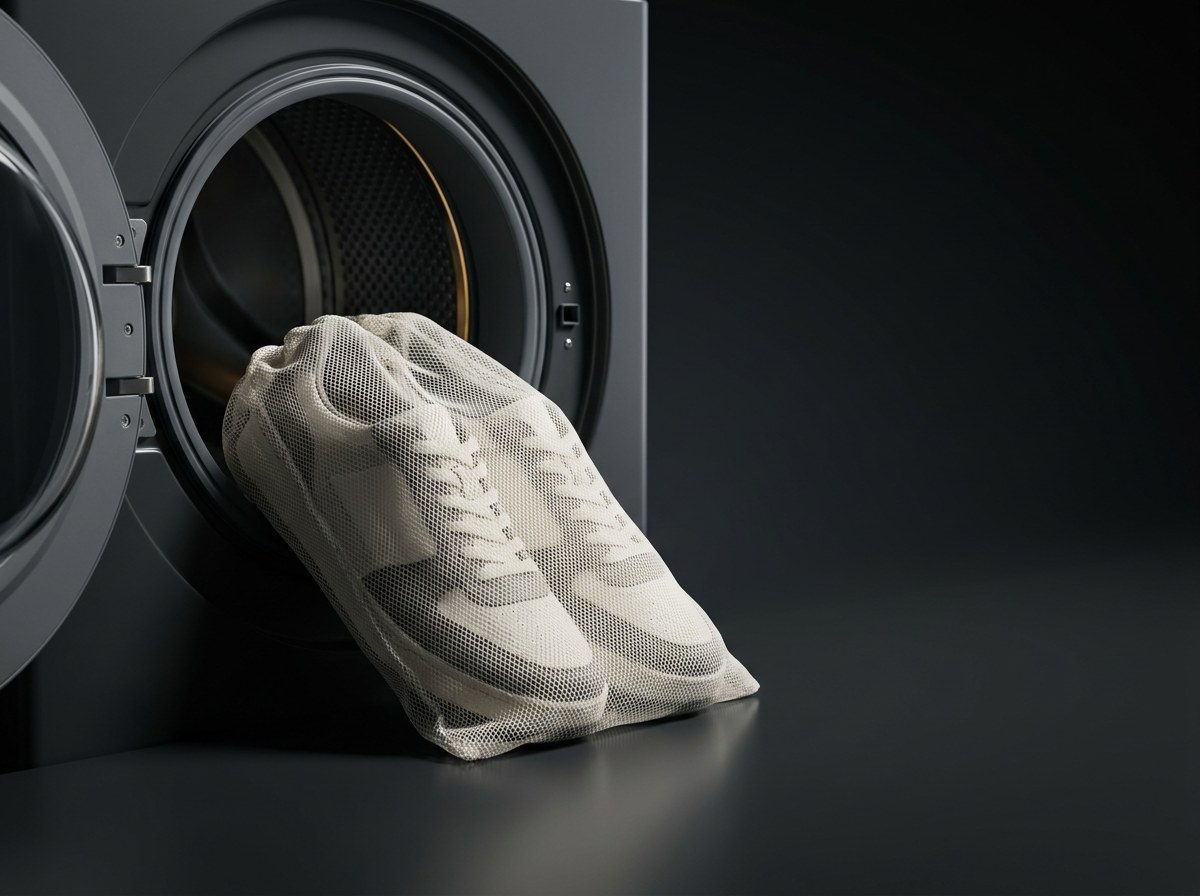
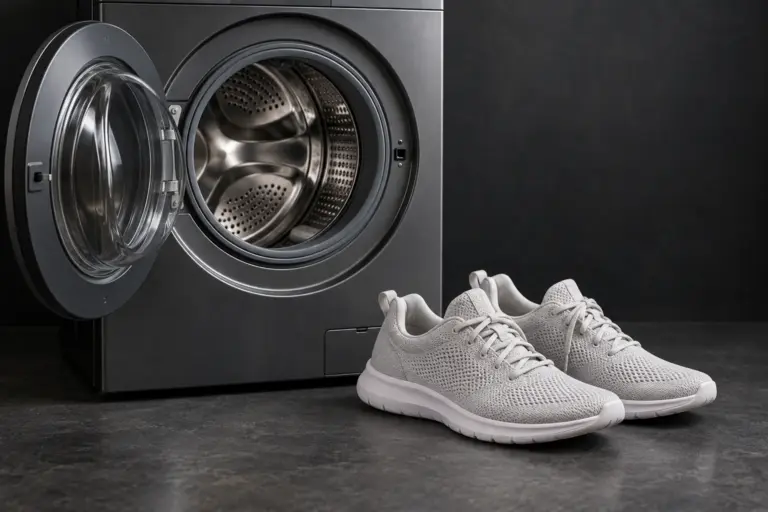
You can machine-wash some canvas and synthetic trainers when their care label permits it. Remove the laces and insoles, place the shoes in a mesh bag, and choose cold water, a delicate cycle and the slowest spin or no spin. Hand-clean leather, suede, embellished pairs and any shoe whose maker rules out machine washing.
A mesh laundry bag protects shoes that the manufacturer has cleared for machine washing. It does not make an unwashable pair washable. Check the care label and materials before you load the drum.
Can you wash sneakers in a washing machine, and what should you check first?
The upper material is only part of the picture. Glued joins, trims and the rest of the shoe matter too.
Start with these checks:
                  [ START: Inspect Your Trainers ]
                                 |
      Does the manufacturer explicitly permit machine washing?
                       /                   \
                    [YES]                  [NO / NO INFO]
                     |                          |
        Check materials and construction   [ HAND CLEAN ONLY ]
                     |
       Are all materials and joins machine-wash compatible?
                       /                   \
                    [YES]                  [NO / UNSURE]
                     |                          |
       [ MACHINE WASH AS DIRECTED ]        [ HAND CLEAN ONLY ]
(Mesh bag + cold cycle)- Some canvas and synthetic models can be machine-washed, but only with the shoe maker’s explicit approval.
- Hand-clean leather, suede, nubuck and delicate trims using a method made for that material.
- For mixed-material pairs, choose a method suitable for the most delicate part. If you are unsure, hand-clean.
Which shoe materials and constructions can safely go in the washing machine?
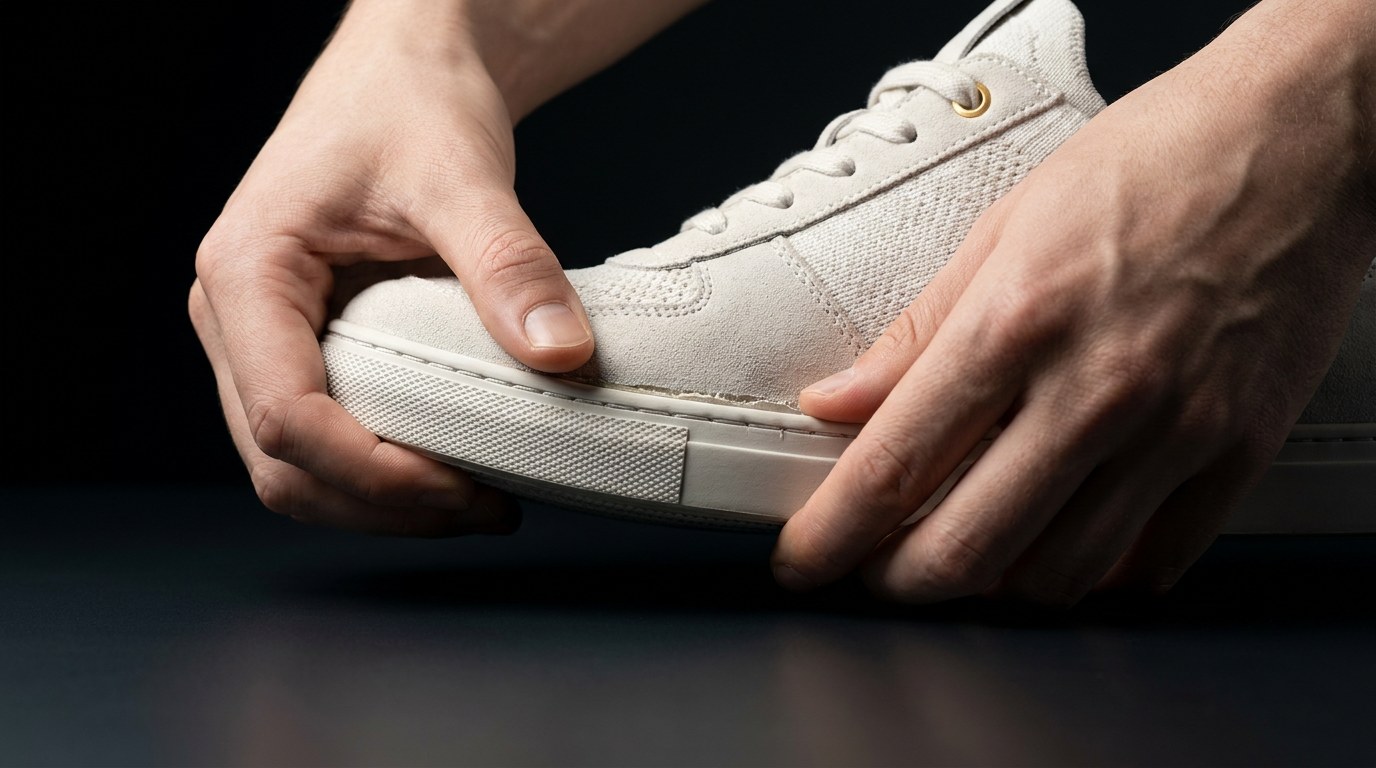
Different shoe components react unpredictably to immersion, heat, and centrifugal force. Water causes genuine leather to dry out and crack, while warm water softens thermoplastic glues that bond soles to uppers.
Use this comparison table to identify where your pair sits and choose the right cleaning method:
| Material / Construction | Machine-Washable? | Recommended Temperature & Cycle | What to Do Instead (Alternative Method) |
|---|---|---|---|
| Mesh & Synthetic Knit (Polyester / Nylon) | Only if the care label permits it | Cold, Delicates / Gentle, slowest spin or no spin | Spot-clean delicate knits by hand using a soft brush and low-moisture foam. |
| Canvas & Cotton Fabric | Only if the care label permits it | Cold, Delicates / Gentle, slowest spin or no spin | Hand scrub with lukewarm water, mild cleaner and a soft brush. |
| Synthetic Leather (Faux PU / Vegan) | No | Not recommended (tumbling cracks polyurethane) | Wipe down panels with a damp microfibre cloth and gentle cleaner. |
| Real Leather (Full-Grain / Smooth) | No (Strictly avoid) | Do not machine wash | Clean with dedicated leather saddle soap or foam, air dry, and condition. |
| Suede & Nubuck | No (Strictly avoid) | Do not machine wash (water creates watermarks and ruins nap) | Use a dry suede eraser and crepe brush; apply specialized dry cleaning foam. |
| Glued or heat-bonded construction | Check the maker; hand cleaning is safer | Follow the care label | Clean uppers and midsoles by hand to limit soaking and agitation. |
| Embellished, Beaded, or Reflective Details | No | Not recommended (friction dislodges trims and peels 3M foils) | Clean around trims using precision detailing swabs or microfibre cloths. |
Does putting shoes in the washing machine damage it or ruin your footwear?
If you ask, does putting shoes in the washing machine damage it, the answer depends on how you prepare the load. Loose shoes can strike the drum and can damage both the footwear and the appliance.
Risks to your appliance
Shoes can hit the drum walls and paddles during washing. Remove stones and packed mud from the tread before loading so that loose debris does not enter the pump or filter.
Risks to your shoes
The biggest risk to shoes is glue failure. Modern trainers rely on polyurethane and hot-melt adhesives to bond soles to uppers. Warm water and heavy agitation soften these bonds, causing sole separation. Additionally, unsecured shoes snag laces and eyelets against drum perforations, tearing mesh weaves and crushing heel counters.
How does a wash bag help?
A suitable bag limits movement and rubbing. If the shoe and machine instructions allow it, add old, colourfast towels to balance the load.
Which programme and cleaner should you use?
Follow the shoe’s care label, select a gentle programme and use the lowest spin or no spin. Dose WASH & SHIELD GEL for your water hardness. Keep within the bag’s 30°C maximum, and use a lower temperature if the shoe instructions require it.
How to wash trainers in a bag, step by step
Use this method only for shoes approved for machine washing.
Step 1: Remove laces and insoles
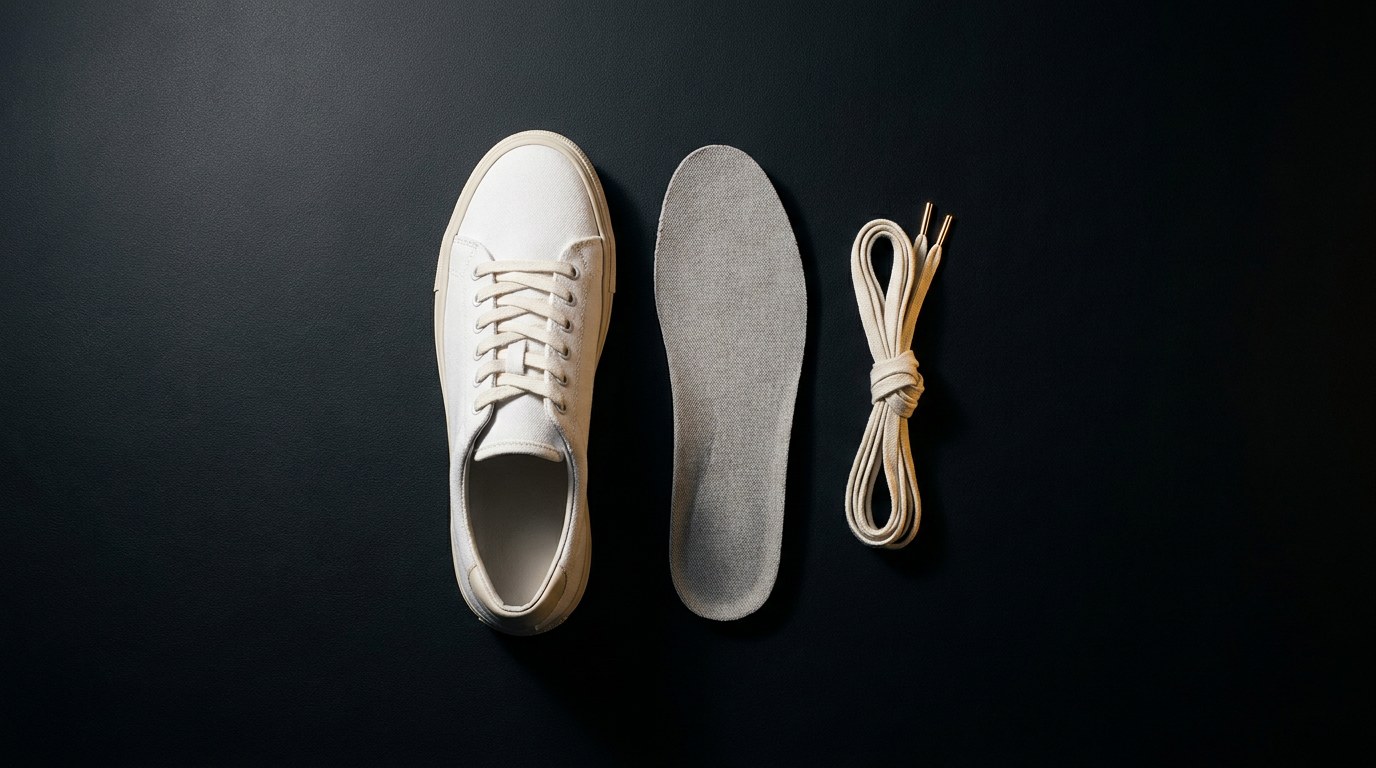
Take out the laces and removable insoles. Clean insoles separately according to their care instructions, and secure laces in a small wash pouch.
Step 2: Dry-brush surface dirt and remove stones
Never place caked mud or gravel into your washing machine. Knock outsoles together over a bin to dislodge loose soil, and use a blunt tool to pry out pebbles wedged in tread patterns to protect your machine's drain pump.
Step 3: Pre-treat heavy stains
Treat stains only with a product that the shoe maker permits. Follow its dose and dwell time, then keep the treated pair within the care-label limits.
Step 4: Bag shoes and cushion the load
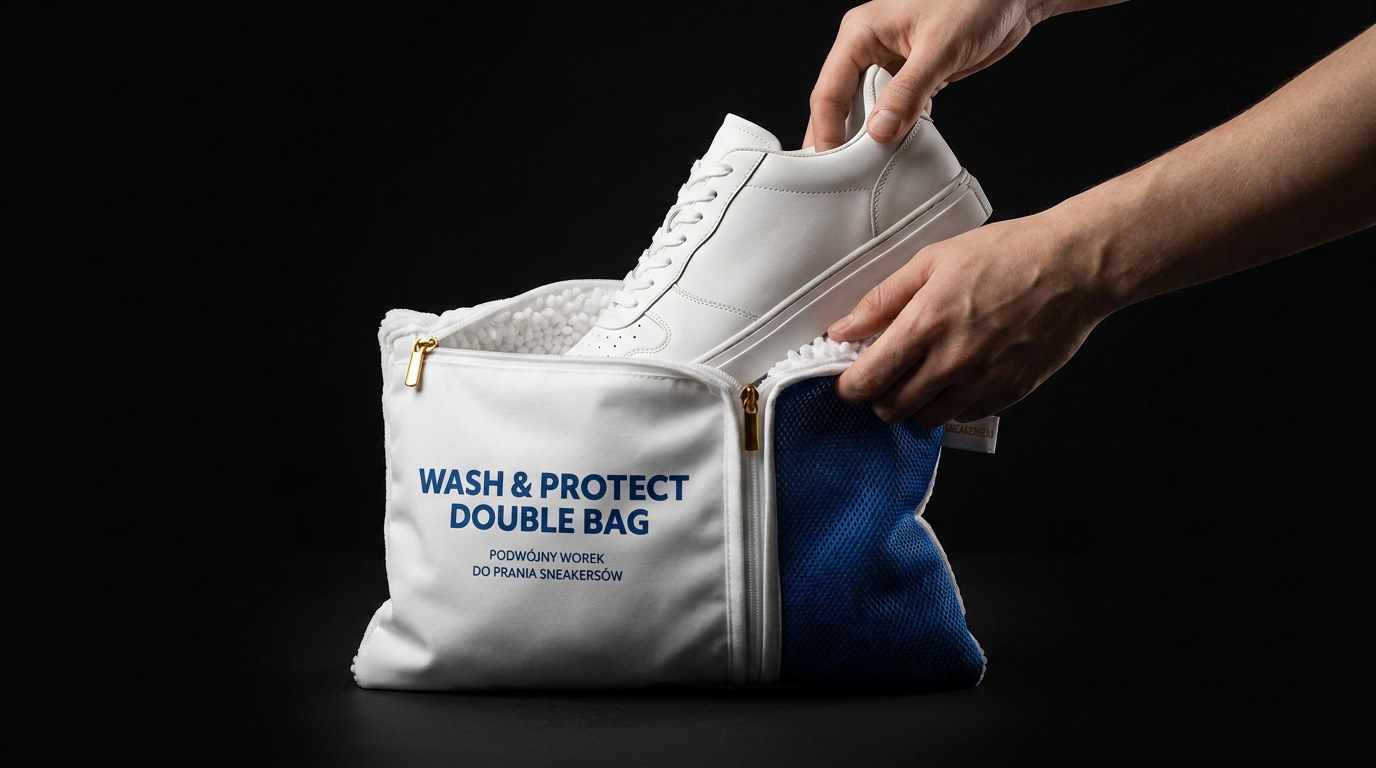
Place one shoe in each compartment of WASH & PROTECT DOUBLE BAG. Close the zip and secure its slider. Do not force a pair into a bag that is too small.
Step 5: Run the cold gentle cycle
Add the label dose of gel to the main-wash compartment. Run the programme permitted by the shoe, bag and cleaner instructions.
Step 6: Unload after the cycle
Remove shoes from the bag as soon as the cycle ends. Leaving damp footwear inside a closed, dark drum encourages bacterial growth and musty odours.
How to dry shoes safely after a washing machine cycle?
Give the pair enough airflow and wait for the whole interior to dry.
Avoid tumble dryers and direct heat
Never place washed trainers into a tumble dryer. Intense heat shrinks synthetic knit uppers, warps rubber soles, and melts internal glue seams. Similarly, resting wet trainers on radiators causes uneven drying, stiff fabrics, and yellow water stains.
Safe step-by-step air drying method
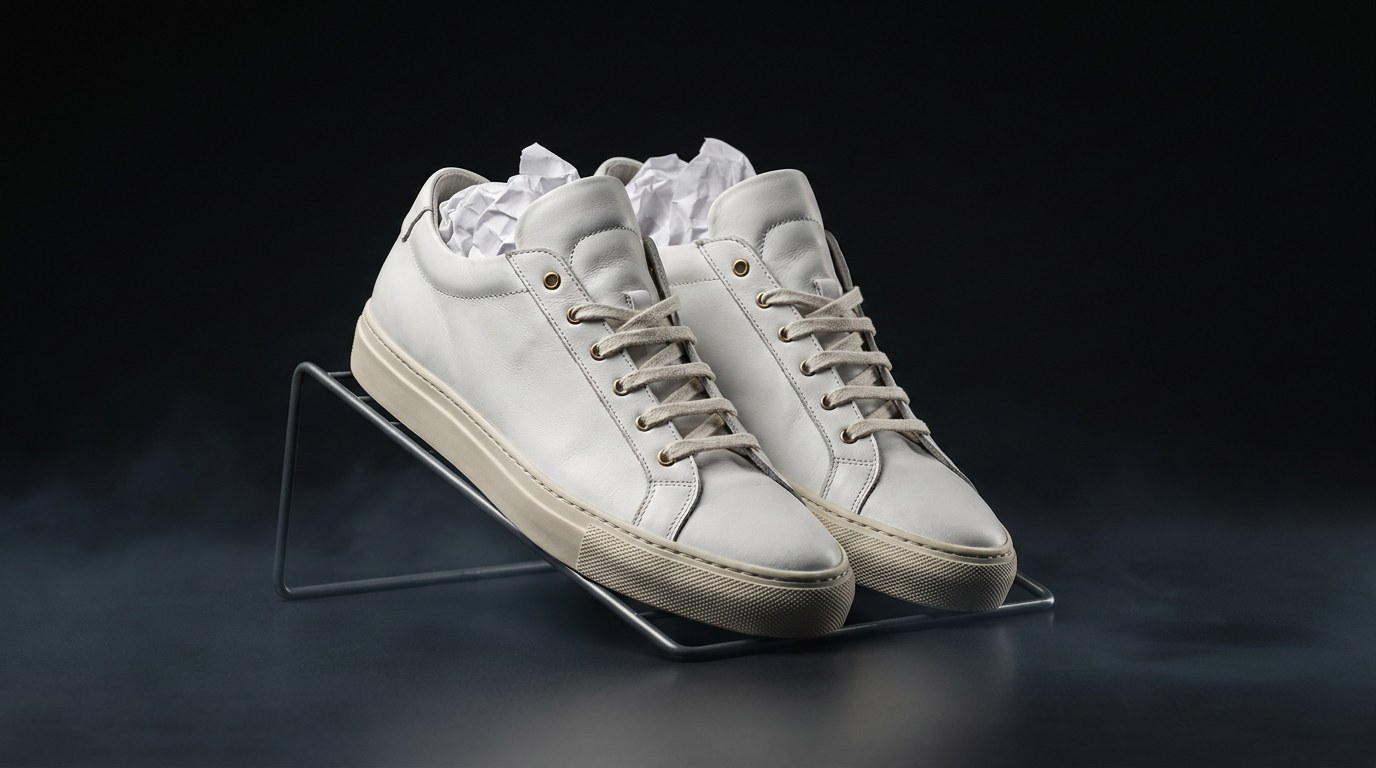
- Absorb internal moisture: Stuff the toe box with clean white microfibre towels or unprinted paper towels to maintain shape and draw out water. Never use printed newspaper, as moisture dissolves ink onto shoe linings.
- Ensure proper airflow: Place shoes on an elevated drying rack in a well-ventilated room at normal room temperature (18°C–21°C).
- Improve airflow: Position an electric fan so that cool air reaches the shoe openings.
- Check the whole shoe: Drying time varies. Reinsert the insoles only when the upper, lining and footbed all feel dry.
If the cleaned material is compatible, reapply WATER PROTECTOR according to its label; consult our guide on waterproofing spray application.
What alternative cleaning methods should you use for non-washable trainers?
If your footwear failed the decision tree because of leather, suede, exposed foam or fragile glue, avoid the washing machine.
For compatible uppers, ACTIVE FOAM cleans without soaking the shoe. Patch-test, shake and unlock the pump, apply the foam and wait for it to turn from blue to white. Clean with the integrated brush and wipe away residue with a damp cloth. Do not use it on suede or nubuck. For mesh, see our hand-cleaning guide.
If foot odour persists after cleaning, washing alone rarely solves the issue. Implement the targeted hygiene protocols in our guide on how to eliminate trapped sneaker odour.
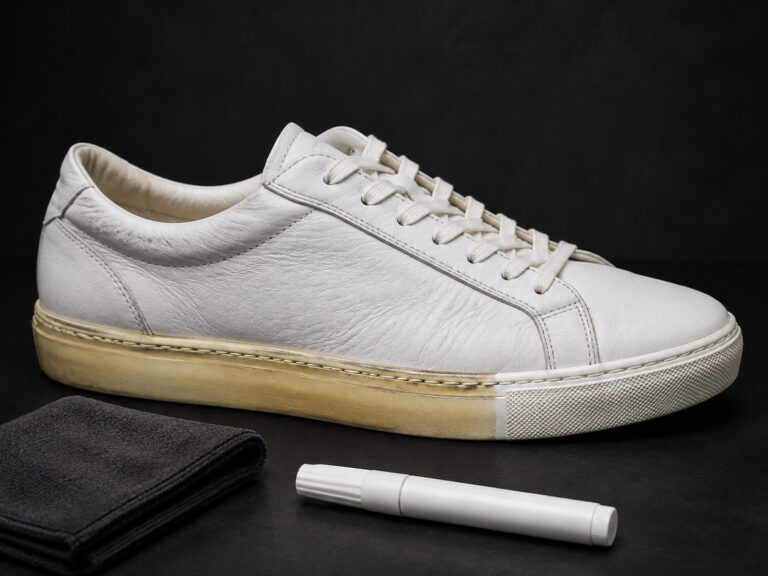
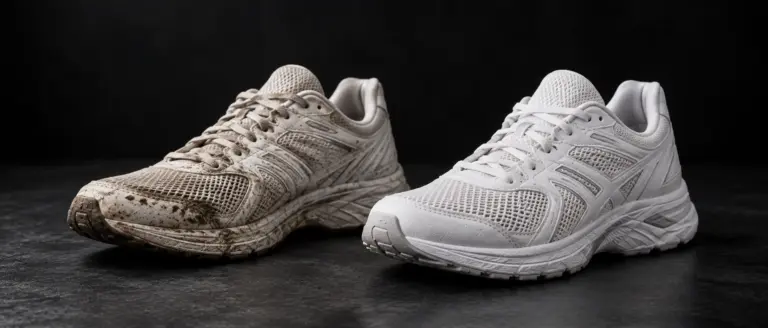
If white midsoles develop yellow discolouration, use our clean-or-restore guide to assess yellowed white midsoles.
FAQ
Is it hygienic to wash shoes in washing machine?
Keep shoes separate from clothing and remove loose dirt before loading. Use the detergent dose on its label and take the pair out when the cycle ends. Clean the appliance filter and run the maintenance programme at the interval and temperature stated in the washing-machine manual.
Can you dry machine-washed shoes in a tumble dryer?
Do not put trainers in a tumble dryer unless their maker permits it. Heat and tumbling can warp soles, damage foam or weaken adhesive seams. Air-dry the pair at room temperature, keep it away from a radiator and wait until the lining and footbed feel dry.
Why is a dedicated mesh wash bag necessary instead of washing shoes loose?
A wash bag limits knocks against the drum, rubbing between shoes and snagging. It does not make a pair machine-washable if the maker says otherwise.
How do you prevent white trainers from turning yellow after machine washing?
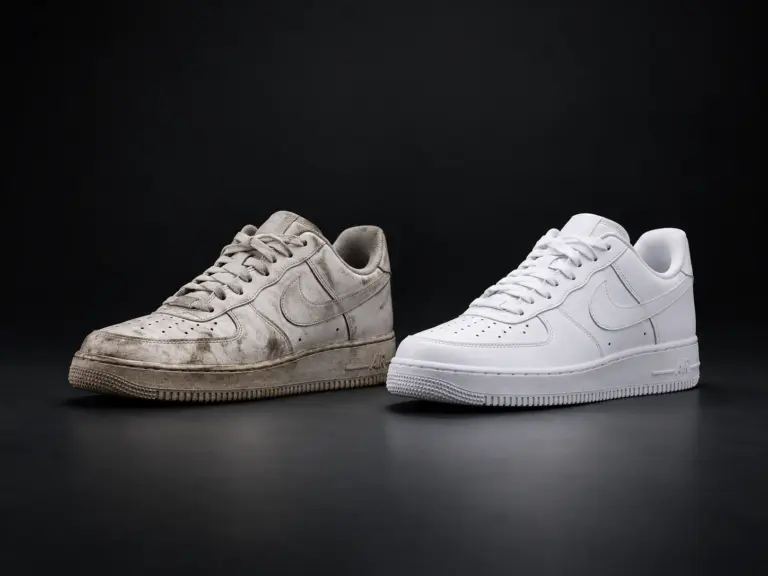
Use the label dose of cleaner, rinse as instructed and dry away from direct heat. Once the shoe is dry, check whether the yellow mark is residue or a change within the material.
How long do sneakers take to dry after coming out of the washing machine?
Drying time varies with the shoe, room humidity and airflow. Keep the shoes at room temperature until the upper, lining and footbed all feel dry. Check the toe box before replacing the insoles. Absorbent white cloths and a fan can improve airflow without applying heat.
 English
 Polish
 German