
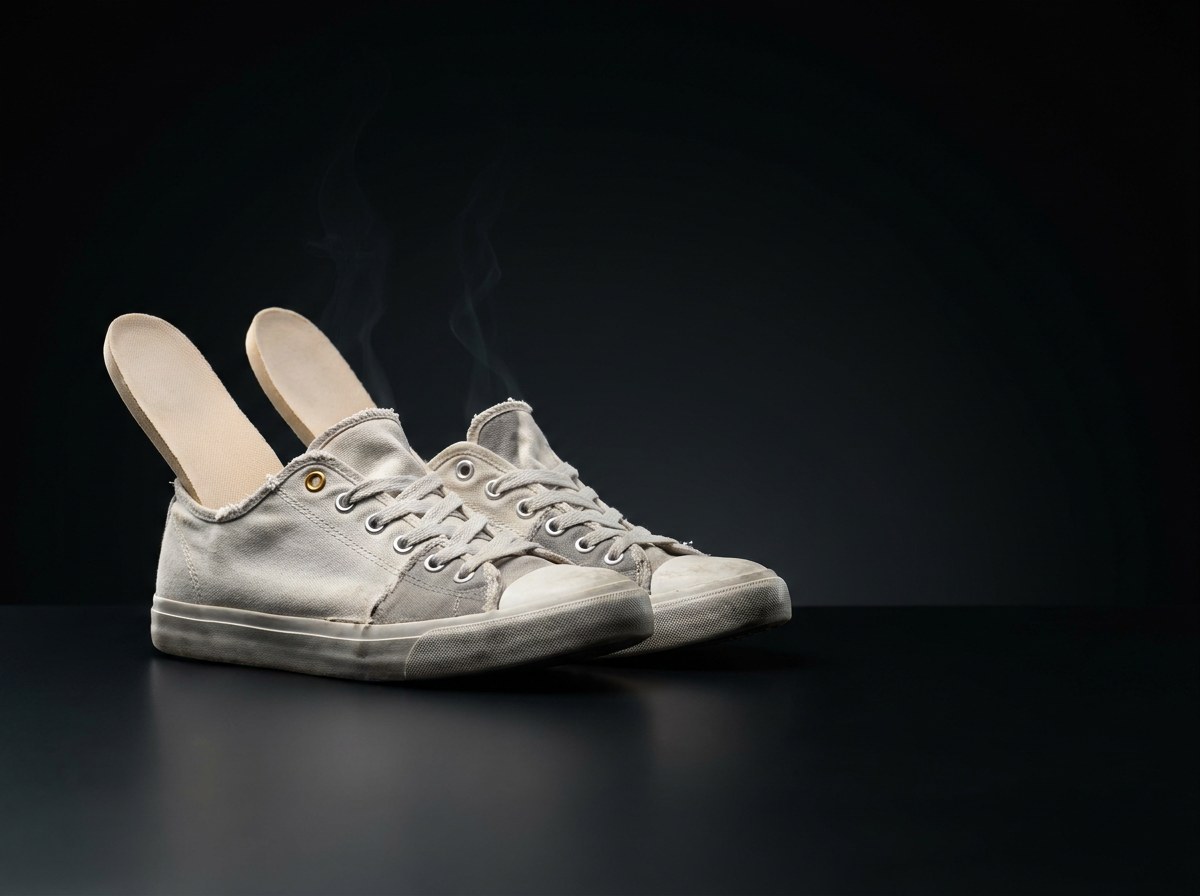
How to Get Smell Out of Shoes: A Cause-First Sneaker SOS
To get smell out of shoes fast, remove the insoles, apply a shoe freshener according to its label, and let the shoes dry before wear. This can refresh a pair without washing, but odour may return if sweat and bacteria remain in the footbed. Clean washable insoles and dry the whole shoe to address the source.
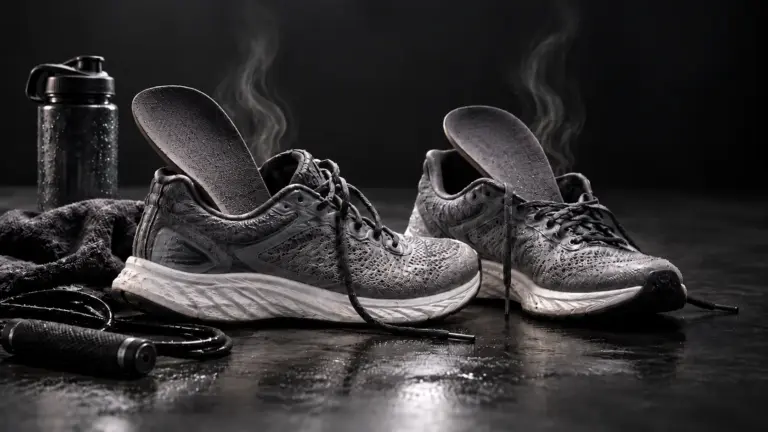
Running shoes after a wet commute and gym trainers after a workout both trap sweat inside their linings and insoles.
Baking soda, perfume and freezing do not remove sweat and dirt from an insole. Lasting freshness requires drying the pair, cleaning washable parts and using a freshener only for the odour that remains.
Why do shoes smell in the first place?
Sweat, moisture and bacteria can lead to unpleasant smells. That is why a stronger fragrance alone may not solve the problem.
Pay particular attention to insoles and linings: they spend hours in contact with your feet and can hold sweat and dirt.
How to remove smell from shoes instantly without washing?
If the pair is dry and needs a quick refresh before you leave, use a freshener made for shoe interiors.
For an emergency refresh:
- Extract the insoles: Pull both insoles out to expose the lower footbed cavity.
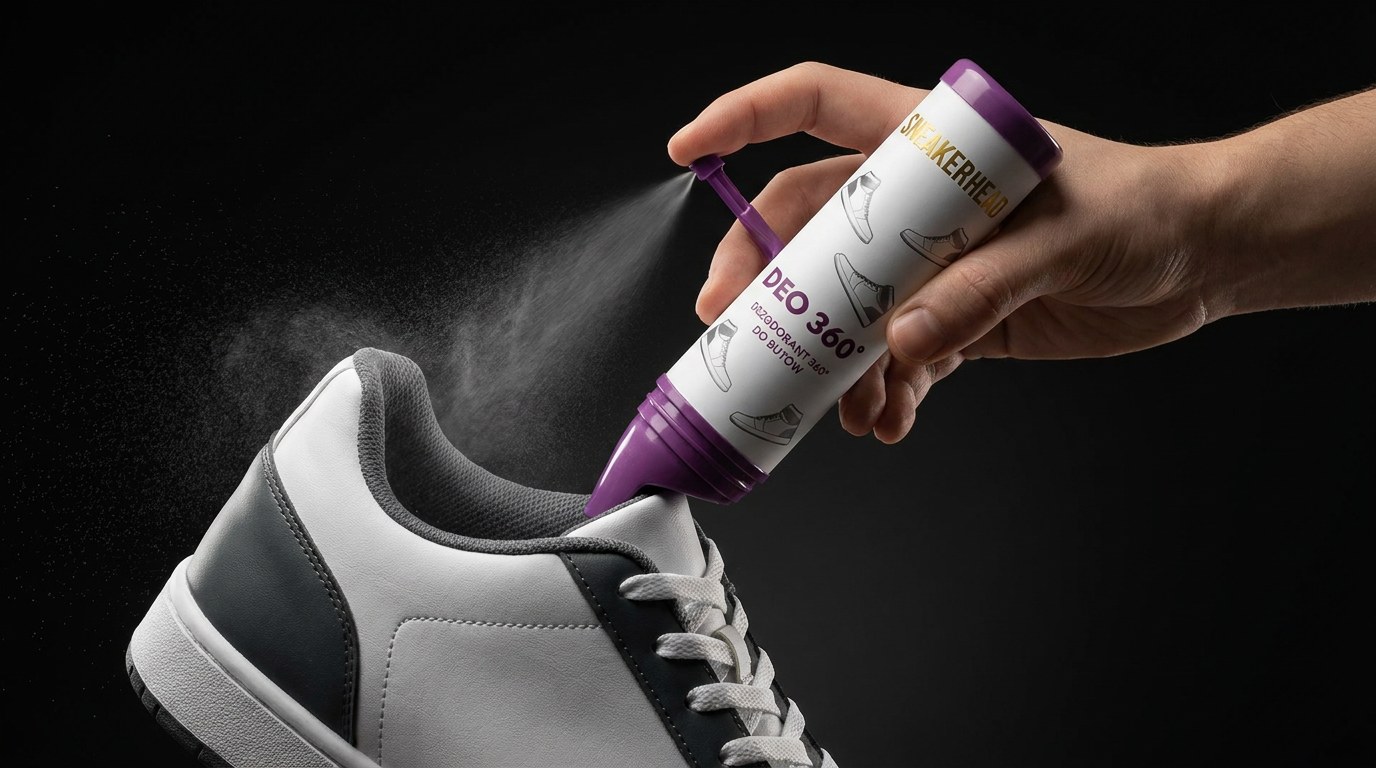
- Apply shoe freshener: Shake DEO 360°, turn the applicator to ON, place its 360° nozzle inside the shoe and press to distribute the deodoriser, then turn it to OFF.
- Leave the shoes open in a ventilated place until dry before wearing them.
This gives the shoe a quick refresh. Let it dry before wearing it.
A quick spray is not a substitute for cleaning. Sweat and dirt remain in the insole, so odour can return when you wear the pair again.
1. Dry the interior
Loosen the laces and open the tongue after wear so air can reach the lining.
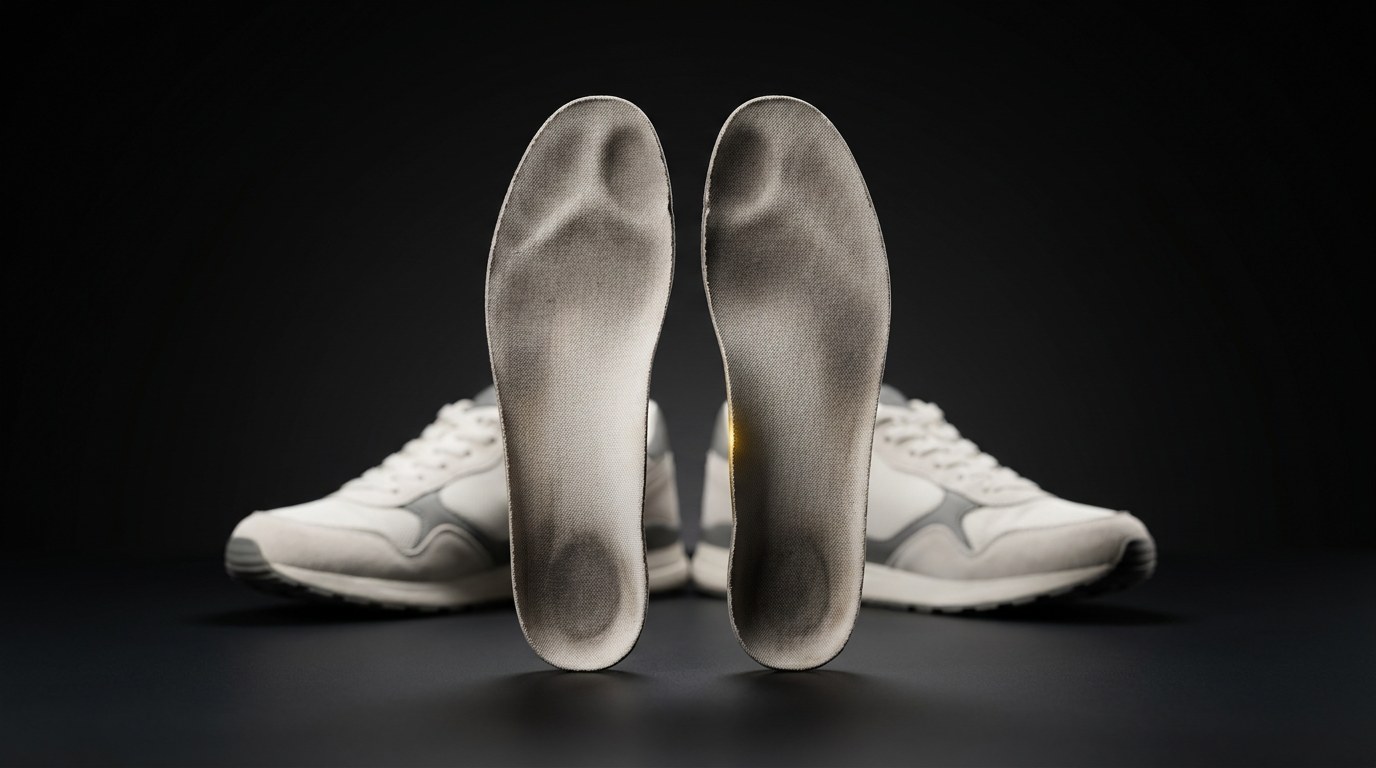
Rotate pairs when a shoe still feels damp after wear. Loosen the laces, remove washable insoles and give the lining enough airflow to dry before you put the shoe on again.
To maximise daily ventilation:
- Unlace and widen the tongue: Loosen laces along the eyestay to open the throat of the shoe.
- Remove insoles after wear: This exposes the footbed and both sides of the insole to moving air.
- Avoid enclosed storage: Never store damp trainers in dark wardrobes, plastic boxes, or zipped sports bags.
- Elevate for airflow: Place shoes on an open slatted rack so air circulates beneath the outsole.
External dampness also compromises hygiene. If wet weather regularly soaks your footwear, protect the exterior by waterproofing shoes with spray. A water-repellent spray helps reduce water ingress through compatible uppers; it does not seal seams or openings.
2. Clean insoles and linings
Airing does not remove accumulated sweat and dirt. If the smell returns quickly, check the insoles.
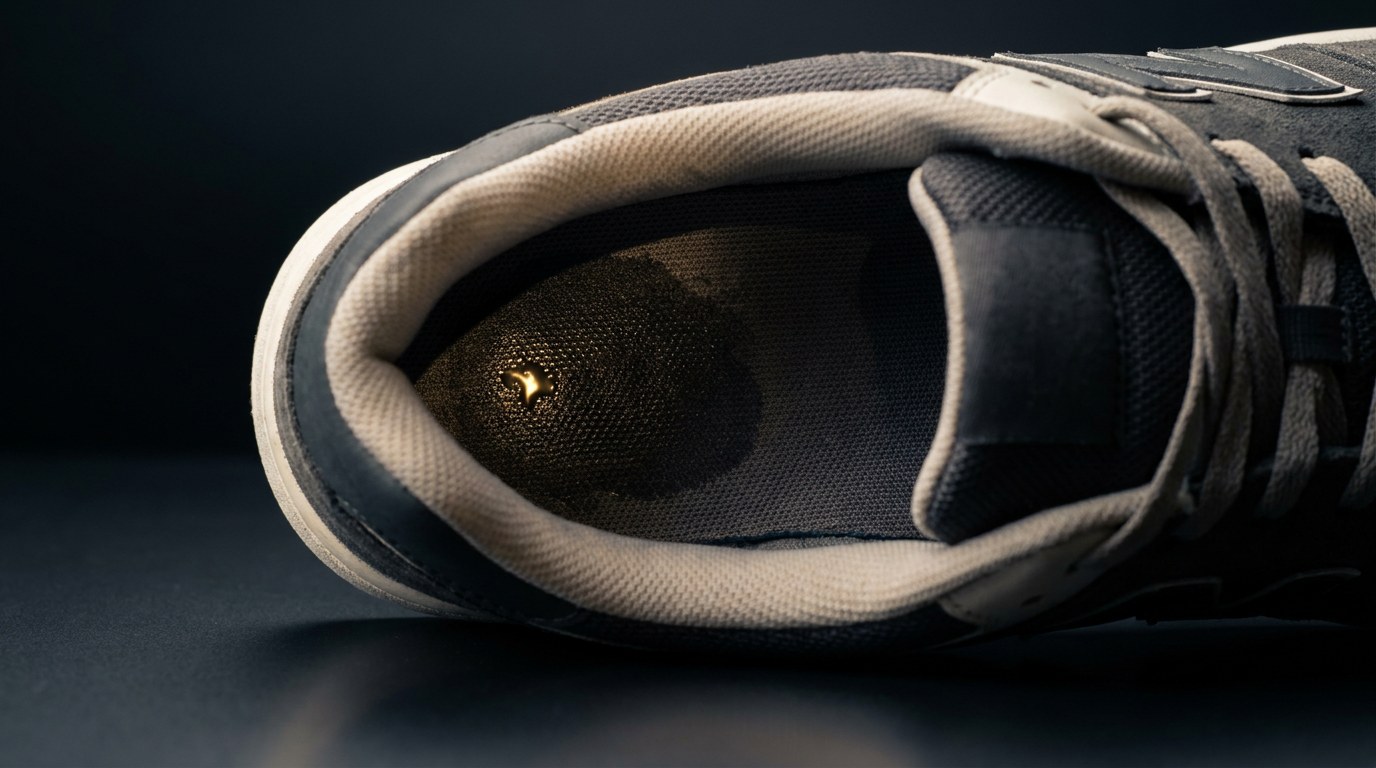
Check whether the maker allows you to remove and wash them. Leather, cork and specialist insoles can need different care.
If hand washing is allowed:
- Follow the insole label: If it permits hand washing, use lukewarm water and a mild cleaner. Do not use hot water.
- Scrub with a soft brush: Work suds into the top cloth and foam underside in circular motions, focusing on metatarsal and heel zones.
- Press-extract dirty water: Sandwich the insole between two dry microfibre towels and press down firmly. Do not wring or twist the insole.
- Air-dry flat: Allow insoles to air-dry completely in a ventilated space before reinserting them.
Wipe down inner textile linings with a damp microfibre cloth dipped in mild suds. Avoid saturating interior cavities, which can weaken sole adhesives. If your trainers have delicate knit uppers that are also soiled, follow our guide to clean white mesh trainers using low-moisture foam.
Can you machine-wash smelly shoes?
For robust canvas and synthetic running trainers cleared by the care label, machine washing provides a thorough flush of trapped sweat salts.
If washing is permitted, remove laces and insoles, dose WASH & SHIELD GEL for your water hardness, and place one trainer in each compartment of the WASH & PROTECT DOUBLE BAG.
Never machine-wash leather, suede, or trainers with rigid carbon plates or exposed glue seams. For cycle settings and drum safety, read our guide on how to wash shoes in the washing machine using a mesh bag.
3. Freshen clean, dry shoes
Once the interior is dry, choose the product that fits your routine.
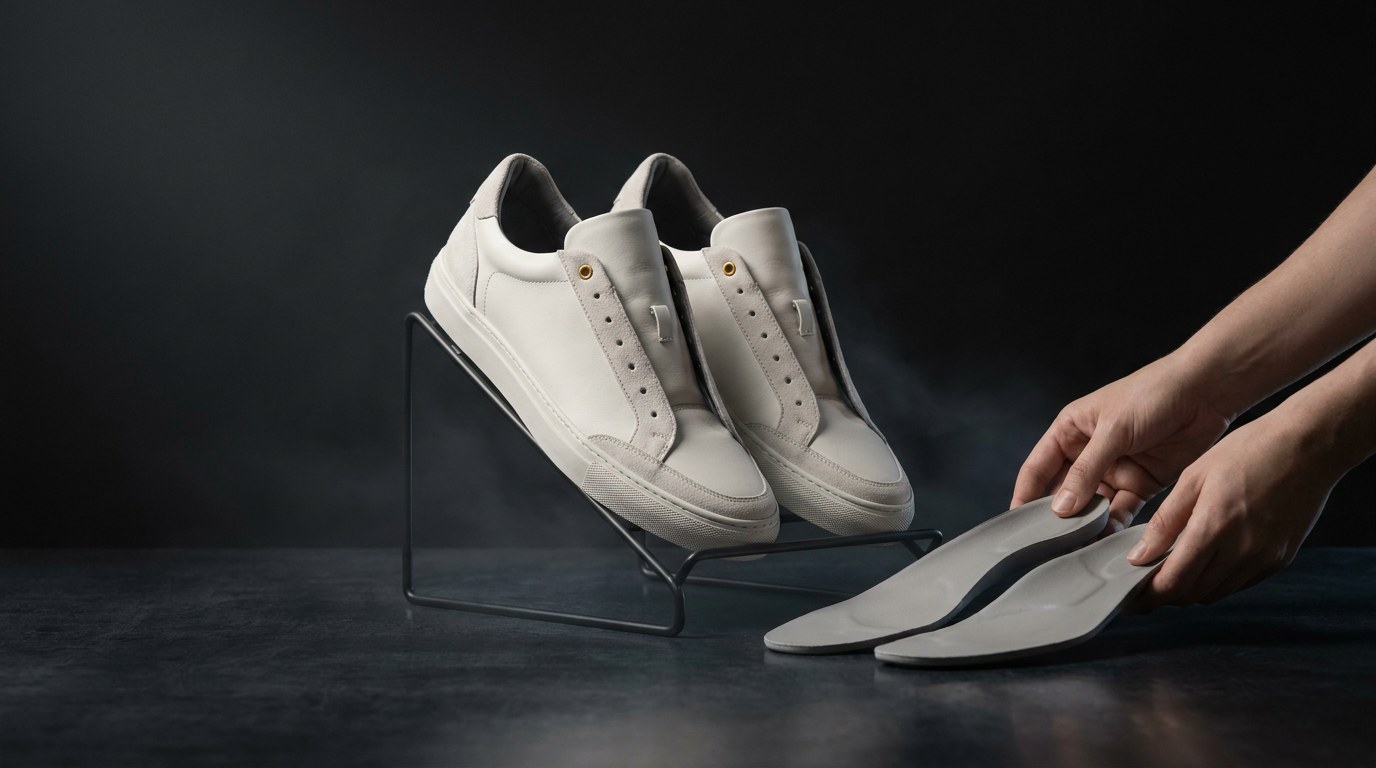
Moisture absorption and freshening
DEO PILLS 2in1 are twist-open capsules for between-wears care. Use them only in dry shoes. Turn each to ON, leave one in each shoe for several hours or overnight, then remove them and turn them to OFF before wearing the pair. Do not open the casing.
A quick refresh with shoe spray
Shake DEO 360°, turn the applicator to ON and use the nozzle inside the shoe as directed. Turn it to OFF afterwards and let the interior dry before wear. It freshens the shoe; it is not a disinfectant.
Which home remedies should you avoid?
Avoid spraying vinegar or rubbing alcohol into a shoe unless its manufacturer approves the treatment for the lining and adhesives. Loose powders can lodge in seams and open-cell insoles. The comparison below separates temporary freshening from cleaning the source.
What is the most effective method to get rid of smell in shoes?
Choose a method that suits the condition of the pair. Sweaty training shoes need different care from a dry pair before an outing.
| Method | Time Needed | Requires Washing? | Material Compatibility | Removes the Cause or Just Freshens? |
|---|---|---|---|---|
| Insole Hand Clean & Dry | 15m clean + 12h dry | Yes (insole) | Synthetic foam, mesh, fabric (avoid raw leather/cork) | Removes cause: Extracts sweat salts, dead skin, and bacteria from footbed |
| DEO PILLS 2in1 | Only in dry shoes between wears; remove before use | No | Product page says all shoe types | Moisture control & freshening: Helps absorb moisture and limit odour; does not clean the insole |
| DEO 360° interior spray | Apply, then let the shoe dry | No | Follow the product and shoe labels | Freshens: Does not replace cleaning or drying |
| Machine Wash in Padded Bag (with WASH & SHIELD GEL) | One cycle plus full air drying | Yes (full shoe) | Only pairs cleared by their care label | Cleans washable material: Removes soil from the shoe; it is not a medical disinfectant |
| Baking Soda Powder Dusting | Method-dependent | No | Check the shoe maker; powder can lodge in seams and foam | Freshens at most: Does not clean sweat and dirt from the insole |
| Freezer Bag Cold Treatment | Several hours | No | Risks vary by material and construction | Unreliable: Cold does not replace cleaning and drying |
As the comparison shows, combine cleaning insoles with thorough drying and wearing shoes in rotation. Fresheners complement this care; they do not replace cleaning or drying.
4. Build a simple daily routine
A few short steps after wear help keep the pair fresh.
Follow this simple daily protocol:
- Unlace fully upon arrival: Untie laces completely when taking shoes off. Opening the shoe throat promotes immediate air exchange.
- Insert deodorising capsules: Turn a pair of DEO PILLS 2in1 to ON and place one in each dry shoe after wear. If the pair is damp, dry it first. Leave the capsules for several hours or overnight, then remove them and turn them to OFF before wearing the pair.
- Wear clean, breathable socks and change them when they become damp.
- Maintain foot hygiene: Wash feet daily with soap, dry thoroughly between toes before putting on footwear, and wear clean socks daily.
- Store on open racks: Keep shoes in a well-ventilated room, away from damp cupboards or unventilated boxes.
FAQ
Does putting baking soda in shoes for odor actually work?
Baking soda can absorb some odour, but it does not clean sweat and skin debris out of an insole. Loose powder can also lodge in seams and porous foam. Check the shoe maker’s care instructions before using it, and keep it away from leather unless the manufacturer permits it.
Does putting smelly shoes in the freezer kill odour-causing bacteria?
A domestic freezer is not a reliable way to sanitise footwear. Cold may suppress odour for a short time, but it does not remove sweat, skin debris or dirt. Clean washable insoles and let the whole pair dry instead. Keep a second pair in rotation if the lining remains damp.
Can I wash smelly trainers in the washing machine to remove odour?
You can machine-wash trainers only if the manufacturer’s care label permits it. For an approved pair, use cold water, a gentle cycle, and a detergent such as WASH & SHIELD GEL according to its label. Place one shoe in each compartment of the WASH & PROTECT DOUBLE BAG. Hand-clean leather, suede and structural running footwear unless their maker says otherwise.
When should I replace shoe insoles instead of cleaning them?
Replace insoles when the foam stays compressed, the cover separates, or odour remains after the maker-approved cleaning and drying process. Choose a replacement that fits the shoe and does not crowd the toe box. Ask a clinician before changing a prescribed orthotic or support insole.
Does persistent shoe odour mean I have a foot health issue?
If the smell comes with itching, redness or peeling skin, ask a clinician or pharmacist for advice. Shoe care alone may not be enough.
 English
 Polish
 German