
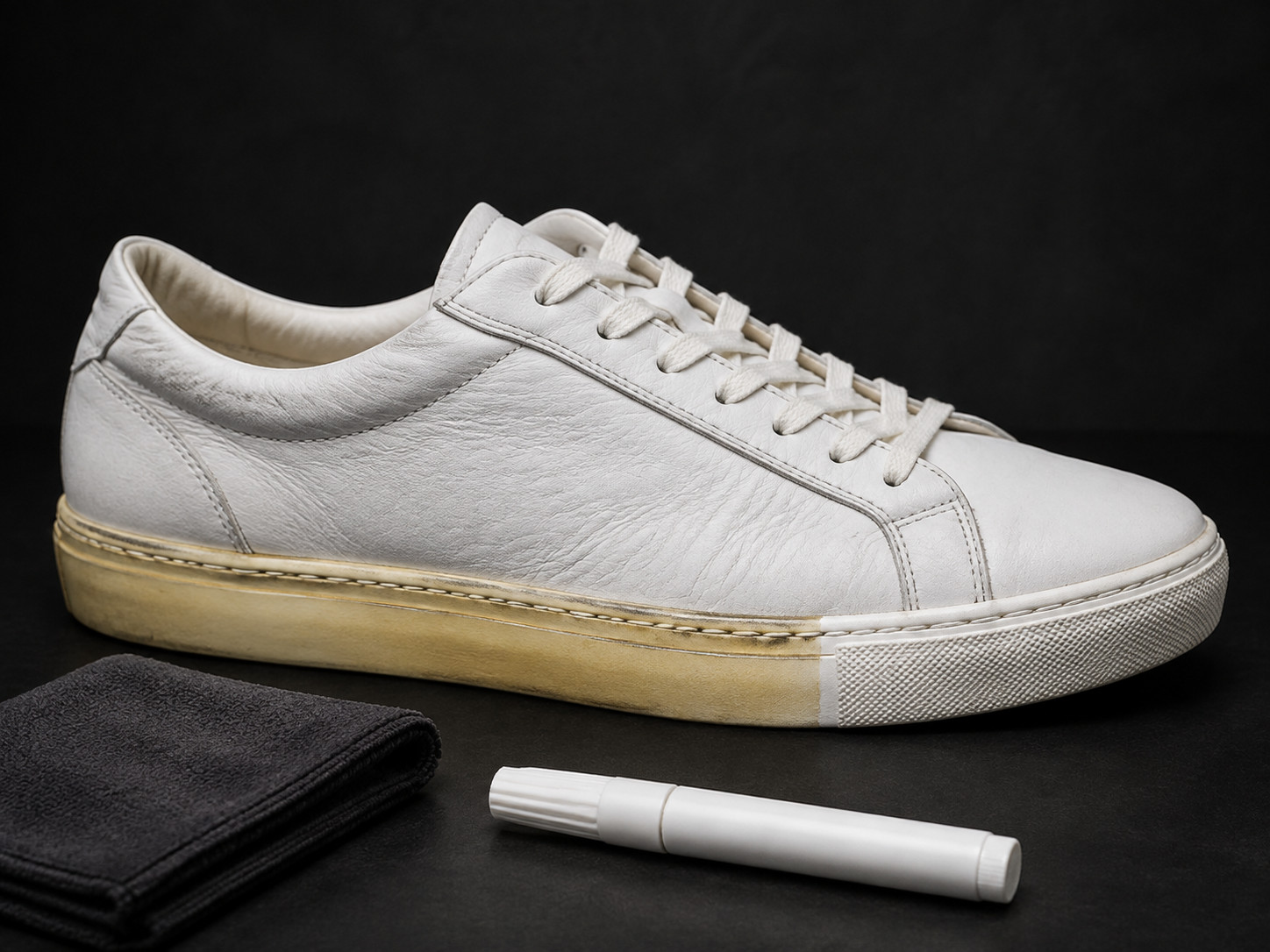
How to Clean White Rubber Shoes That Turned Yellow: Clean or Restore?
To clean white rubber shoes that turned yellow, test a hidden area first. Use a shoe-safe cleaner and its supplied applicator, then wipe away the residue. If the test lifts dirt, continue cleaning. If the rubber itself stays yellow, stop scrubbing: the pair needs cosmetic restoration, such as recolouring, rather than stronger cleaner.
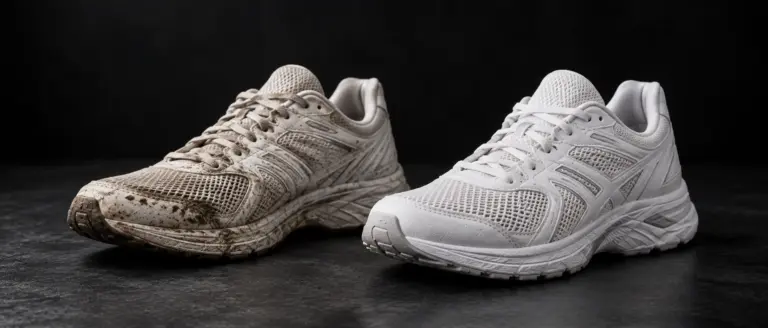
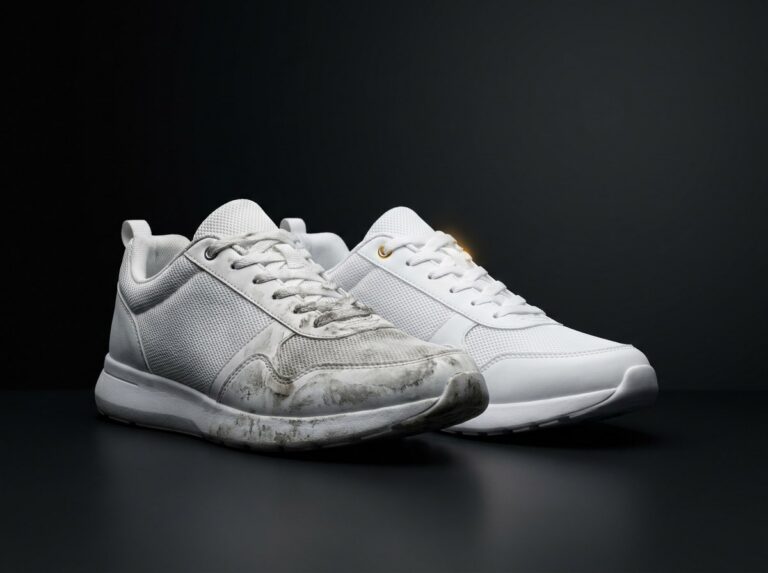
A yellow tint can come from dirt, cleaner residue or a change within the material. Test a small area first rather than scrubbing the whole sole harder.
Why do white rubber soles turn yellow in the first place?
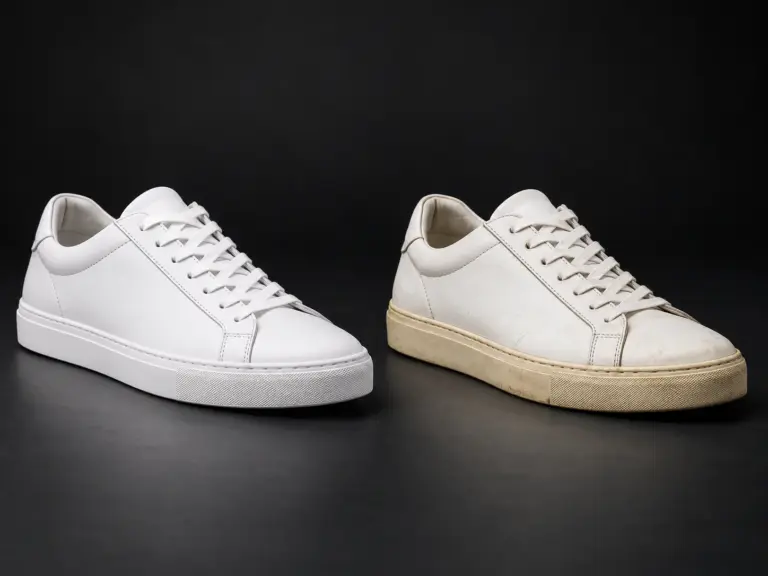
Sunlight and oxygen can oxidise some sole polymers, changing their colour within the material. A cleaner cannot remove that internal change.
Washing can leave a different kind of mark. Dirty water or cleaner residue may dry as a yellow or grey tide line on the surface. If the colour appeared after washing, review our guide on how to wash shoes in the washing machine with a mesh bag and check whether a gentle test clean lifts it.
Yellowing concentrated along the upper-to-sole seam may come from aged or damaged adhesive. Stop if the seam feels soft, sticky or separated; a footwear repairer should assess the bond before cosmetic work.
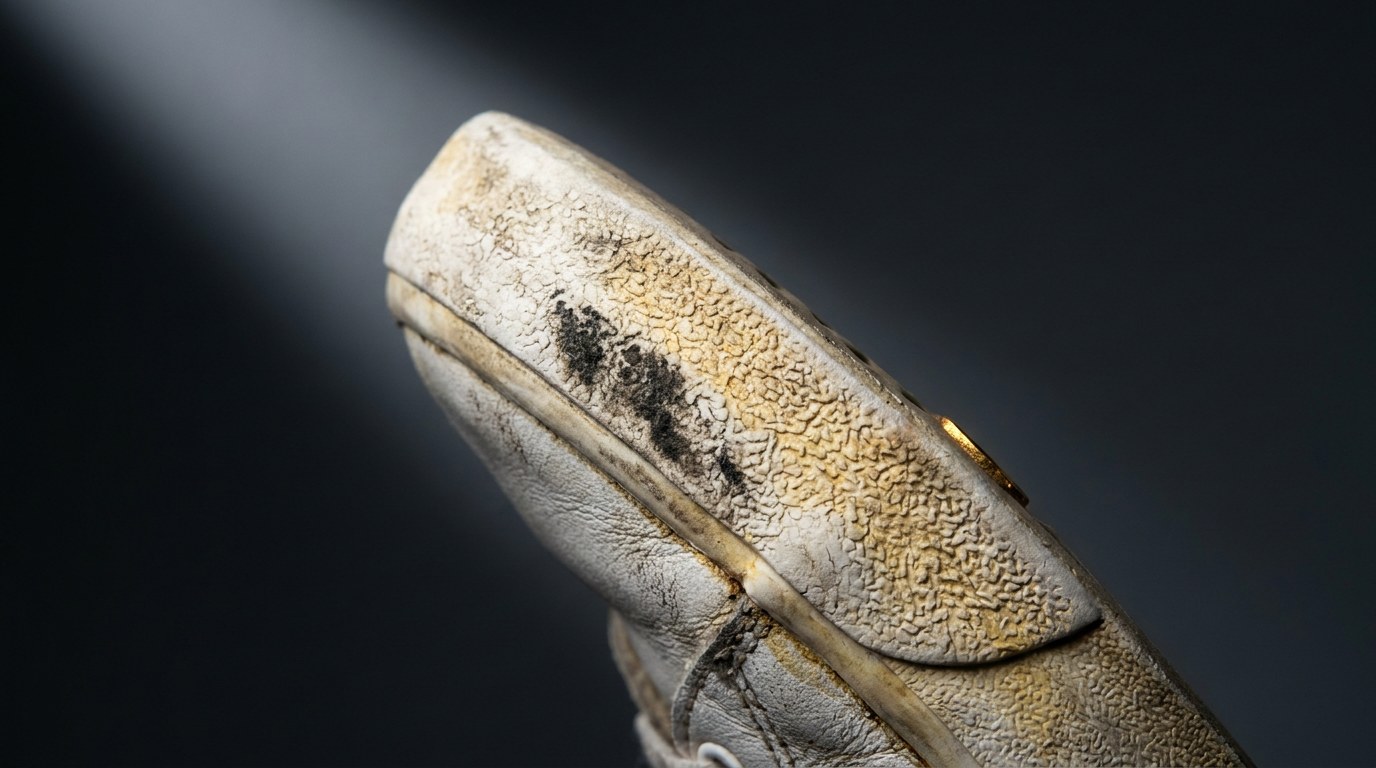
How can you tell if yellowing is dirt, detergent residue, or permanent oxidation?
Try the cleaner on a hidden area first. Harder scrubbing will not restore a colour that has changed within the material, and may damage the finish.
Select a small, hidden test area, such as the bottom edge of the inner arch:
- Put a small amount of SNEAKER CLEANER on the sponge supplied with the product.
- Work it over the test zone with light circular motions.
- Remove the paste with a damp microfibre cloth, let the spot dry and inspect the rubber in neutral light.
What should you look for?
- Dirt: the mark transfers to the cloth and the surface looks lighter.
- Cleaner residue: streaks appeared after washing and may lift with gentle cleaning and removal of residue.
- Material colour change: the surface is clean but stays yellow once dry.
What is causing your yellow rubber soles and how should you treat them?
Use this overview to choose your next step.
| Symptom | Likely Cause | How to Test It | Safest Next Step |
|---|---|---|---|
| An even yellow tint | Material ageing | The dry test area stays the same colour | Consider recolouring on a suitable surface |
| Discolouration along a glued join | Ageing or damaged adhesive | Check whether the join is firm | Have loose or sticky joins assessed for repair |
| Streaks after washing | Residue or dirty water | Gently clean a small area | Remove residue thoroughly and let the pair dry |
| Marks on high-wear areas | Surface dirt | Dirt transfers to the sponge | Clean with a product made for the surface |
| Tide marks on mesh or fabric | Dirt carried through by water | Check the result after gentle cleaning | Use a method for the upper, as in our mesh-cleaning guide |
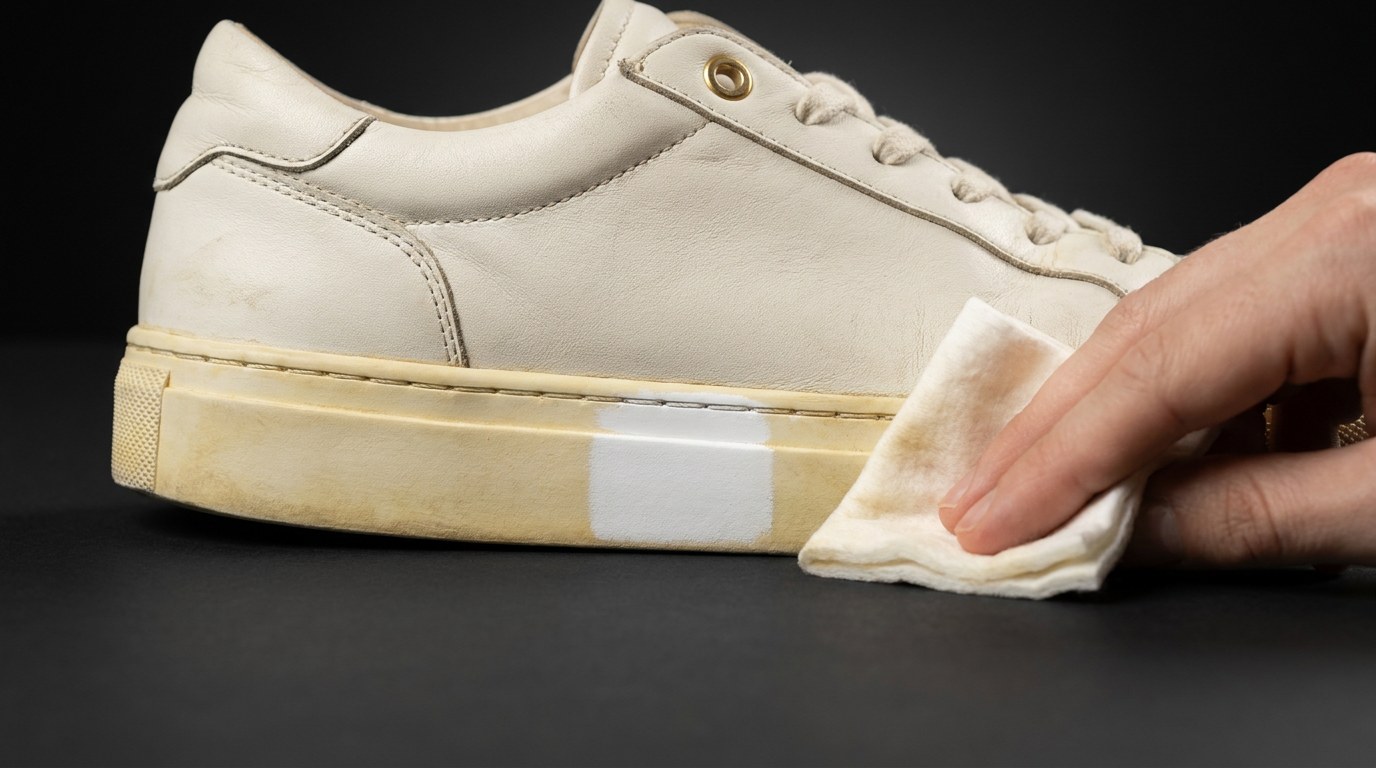
How to remove yellowing from shoes soles at home when it is surface dirt?
If the test shows that the mark lifts, work in small sections and wipe away dirty residue as you go.
Step 1: Dry-brush loose exterior dirt
Never apply liquid cleaners to dusty footwear. Use a stiff outsole brush or dry nylon utility brush to sweep away dried mud, grit, and loose particles from the tread patterns and rubber sidewalls.
Step 2: Prepare your cleaning tools and solution
Gather SNEAKER CLEANER, its supplied sponge and two clean microfibre cloths. Keep one cloth damp for residue removal. If the adjacent upper needs cleaning, follow its care label or use ACTIVE FOAM after a hidden-area test.
Step 3: Clean the rubber sidewalls
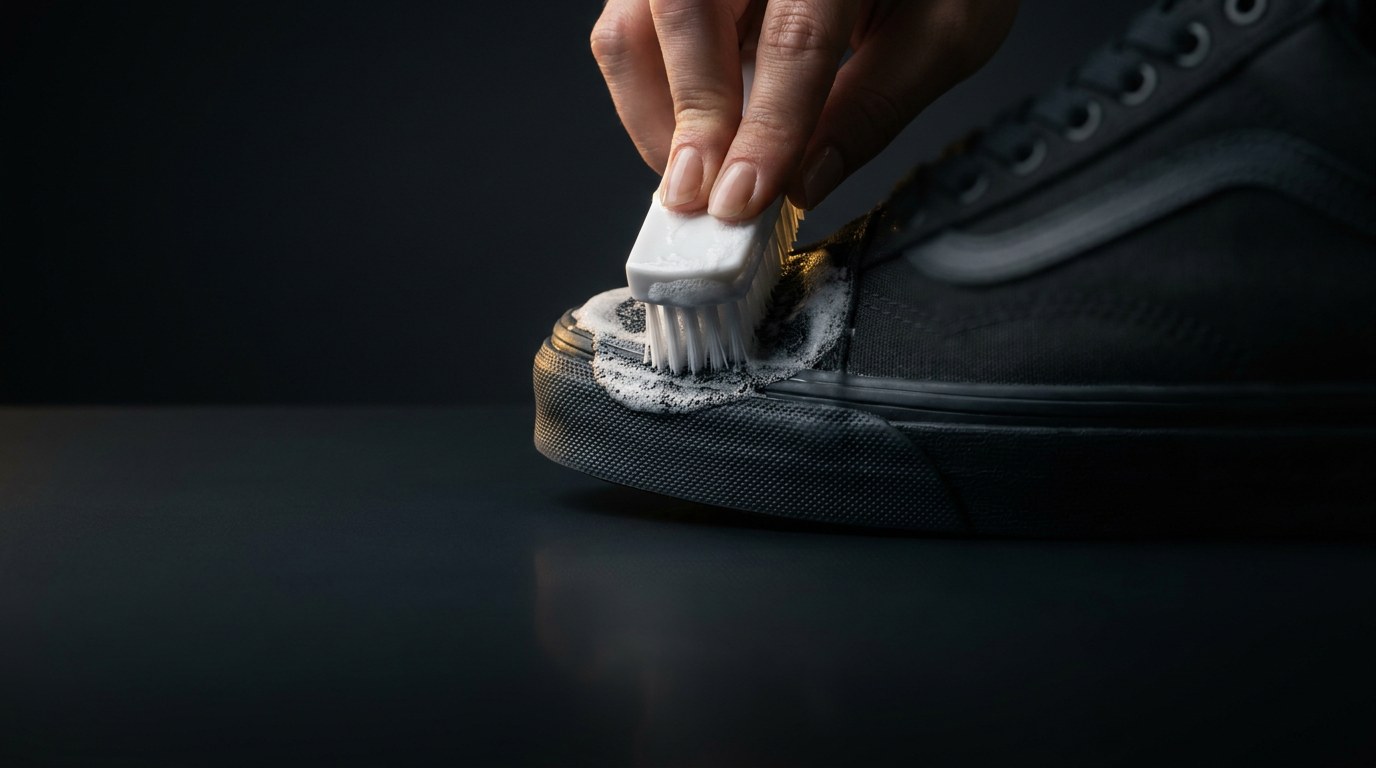
Take a small amount of paste with the supplied sponge. Work over the rubber in light circular motions, following the product instructions.
Step 4: Remove the residue
Wipe away the paste and lifted dirt with a damp microfibre cloth. Rotate the cloth so that you do not spread grime over a clean section.
Step 5: Treat textured rubber crevices and toe bumpers
Use the edge of the supplied sponge on textured toe caps and midsole grooves. Avoid wire brushes or sharp tools that can score the rubber.
Step 6: Wipe and air-dry
Dampen a clean microfibre cloth with plain water and wipe down the rubber sole to remove any residual cleaning surfactants. Allow the footwear to air-dry completely at room temperature in a shaded, well-ventilated space.
How to turn yellow shoes white again when cleaning fails?
If the cleaned test area stays yellow once dry, stop scrubbing and assess whether recolouring is suitable.
On opaque white rubber, consider a colour-restoring product made for that surface.
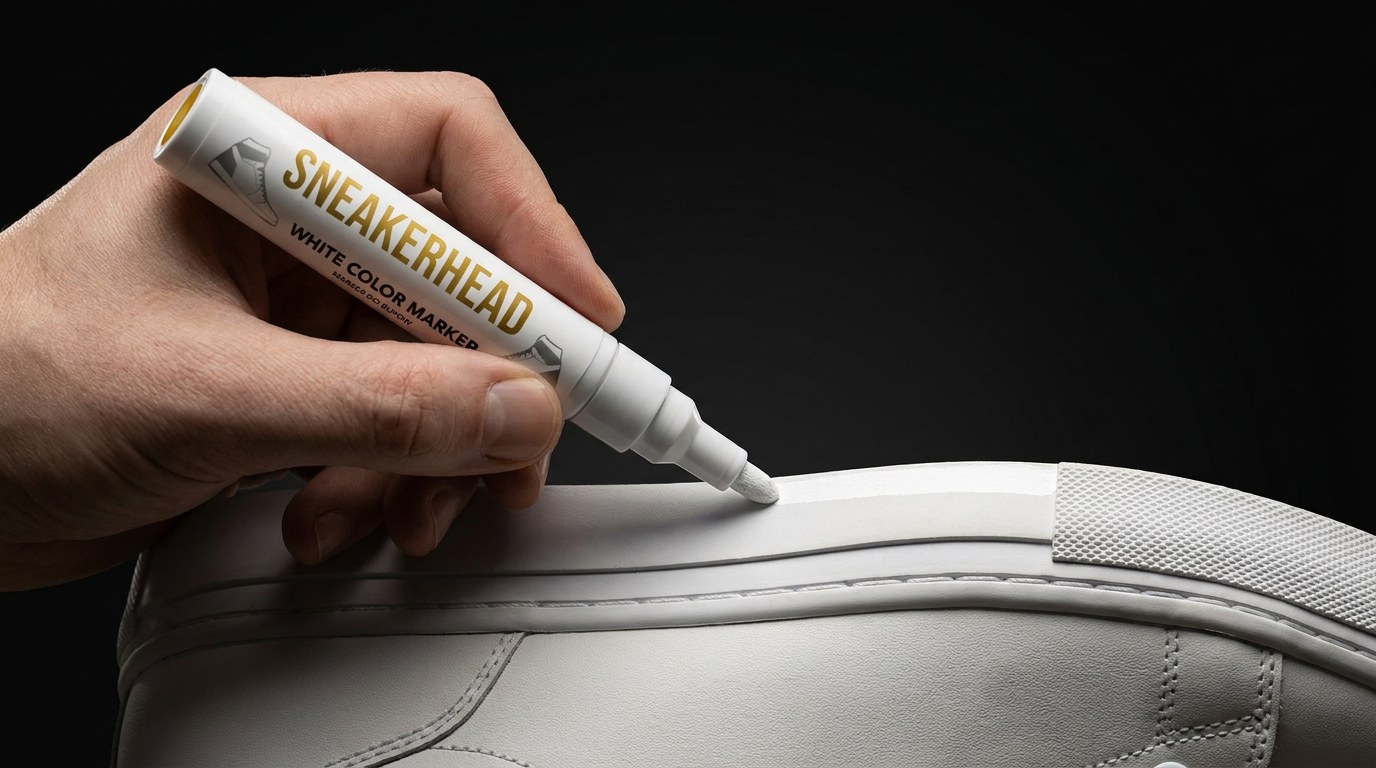
Refresh the colour with a white marker
COLOR MARKER WHITE is intended for leather and rubber shoe elements. It covers discolouration with permanent white ink, so treat the result as recolouring rather than cleaning:
- Surface prep: Ensure the rubber is clean and dry. Do not add solvents that the shoe or marker instructions do not call for.
- Masking: Apply low-tack painter's tape along the upper edge where the sole meets suede, leather, or mesh fabric to prevent accidental paint transfer.
- Prime the marker: Shake it with the cap fitted, then press the tip until ink starts to flow.
- Apply thin coats: Add thin layers to the selected area without flooding the surface.
- Let it dry: Follow the marker instructions and do not wear the pair until the ink has dried.
What about transparent soles?
An opaque white marker would hide their transparency. For these soles, ask an experienced restoration service to assess the pair instead of copying chemical treatments from the internet.
How to prevent white shoes from yellowing after washing and wear?
Regular cleaning and suitable storage help the pair keep its fresh appearance.
1. Master safe post-wash drying
Understanding how to prevent white shoes from yellowing after washing hinges on moisture and heat control. Never place wet footwear on or near radiators, fan heaters, or under direct blazing sunlight. Intense heat bakes detergent residues into porous rubber and reactivates sole glues.
Instead, blot all exterior moisture with a clean microfibre towel immediately after washing. Stuff the shoe cavities with unprinted white towels to absorb internal dampness, and air-dry the trainers in a cool, shaded room with active airflow (such as near an oscillating electric fan).
2. Apply a protective hydrophobic barrier
Once the pair is clean and dry, WATER PROTECTOR can help protect compatible leather, suede, nubuck and textile areas from moisture and everyday dirt. It does not reverse yellowing, and its product page does not list rubber as a target material. Read our full guide to waterproofing spray application before treating the upper.
3. Implement UV-shielded storage habits
Because photo-oxidation is driven by light and atmospheric exposure, store your white trainers away from open window sills. Keep footwear in a dark, temperature-controlled environment (such as a wardrobe or opaque shoe drawer) with moderate humidity. Avoid airtight plastic containers if humidity is present, and place silica gel packets nearby to minimise moisture-accelerated polymer breakdown.
FAQ
What causes yellow stains on white shoes?
Dirt, cleaning residue or changes in the rubber, foam or adhesive can all cause yellow marks. Start with a gentle test on a small area.
Does household bleach work to whiten yellowed rubber soles?
Avoid household bleach on yellow soles. It can damage rubber, foam and neighbouring materials. Choose a cleaner made for the particular surface.
Can baking soda and toothpaste turn yellow soles white again?
Toothpaste and bicarbonate pastes can abrade surface grime, but they can also leave residue and will not change yellowing within the material. Use a cleaner made for rubber first. If a hidden test spot stays yellow after drying, more abrasive paste will not turn cleaning into restoration.
Is hydrogen peroxide and sunlight safe for un-yellowing shoe soles?
Do not copy a concentration or exposure time from another shoe. Ask a restoration service to assess transparent soles.
Can oxidised white rubber ever be permanently restored?
Oxidation changes the material rather than leaving removable dirt on top. COLOR MARKER WHITE can cover discolouration on clean, dry rubber, but that is cosmetic restoration and may need touch-ups as the shoe flexes and wears. The aged material remains beneath the new colour layer.

 English
 Polish
 German